Ocean life
New deep-sea coral family found in Pacific
Marine researchers exploring underwater mountains near Costa Rica have described an unusual branching coral that required its own taxonomic family.
Reported by ScienceDaily · · 2 min read
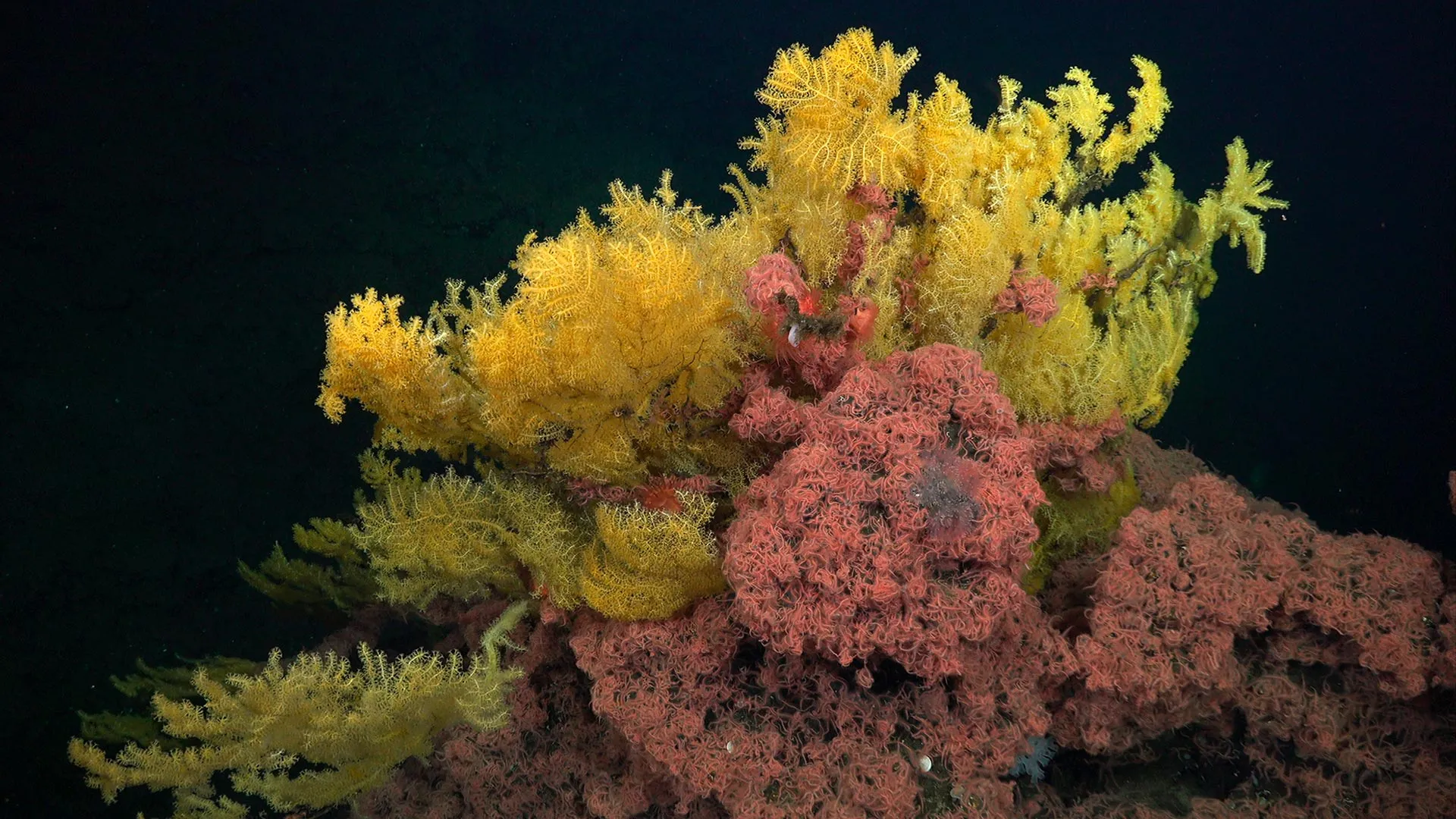
Marine scientists exploring seamounts off the Pacific coast of Costa Rica have identified an unusual deep-sea coral that prompted the establishment of a brand-new taxonomic family. Living between 360 and 529 meters beneath the surface, the bright yellow organism features a branching structure reminiscent of a tree, with individual colonies sometimes exceeding one meter in height.
Specimens were gathered across two oceanic voyages conducted in 2019 and 2023 by the Schmidt Ocean Institute, utilizing the remotely operated vehicle SuBastian from the vessels Falkor and Falkor (too). The team surveyed rocky undersea ridges along the Pacific margin and surrounding Isla del Coco, where colonies flourished alongside dense mats of brittle stars.
That striking environment led researchers to give the organism an Elvish-inspired scientific moniker, Laurinque elenya, based on the fictional Quenya tongue developed by author J.R.R. Tolkien. The genus label translates to golden tree, while the species designation signifies of the stars, honoring both its vivid golden branches and the surrounding field of star-like echinoderms.
Genetic investigation reveals unique lineage
Classifying the specimen within the marine family tree proved difficult. Standard taxonomic testing on three separate identification genes produced conflicting links to unrelated groups. To resolve the confusion, investigators turned to phylogenomics to evaluate hundreds of genetic markers simultaneously, as detailed in the publication ZooKeys.
The genomic work confirmed the animal does not fit into any previously known classification. While sharing its closest evolutionary ties with Eunicellidae, its anatomy and genome diverge sufficiently to warrant establishing the family Laurinqueidae.
Lead investigator Odalisca Breedy from the Universidad de Costa Rica noted that although she initially expected the octocoral to fit existing categories, physical assessments quickly showed it was entirely distinct. Later expeditions and genetic collaboration with researchers Cathy McFadden, Catalina Murillo, and Andrea Quattrini confirmed its placement.
The finding highlights the rich biological diversity of vulnerable deep-water seamounts, which offer vital structural habitats for ocean organisms despite widespread gaps in deep-sea exploration.


