Ocean life
245 Tiny Animals Found Living Inside a Single Deep-Sea Rock
Researchers in the central Pacific uncovered a rich community of microorganisms sheltered within ancient metal-rich nodules on the ocean floor.
Reported by ScienceDaily · · 2 min read
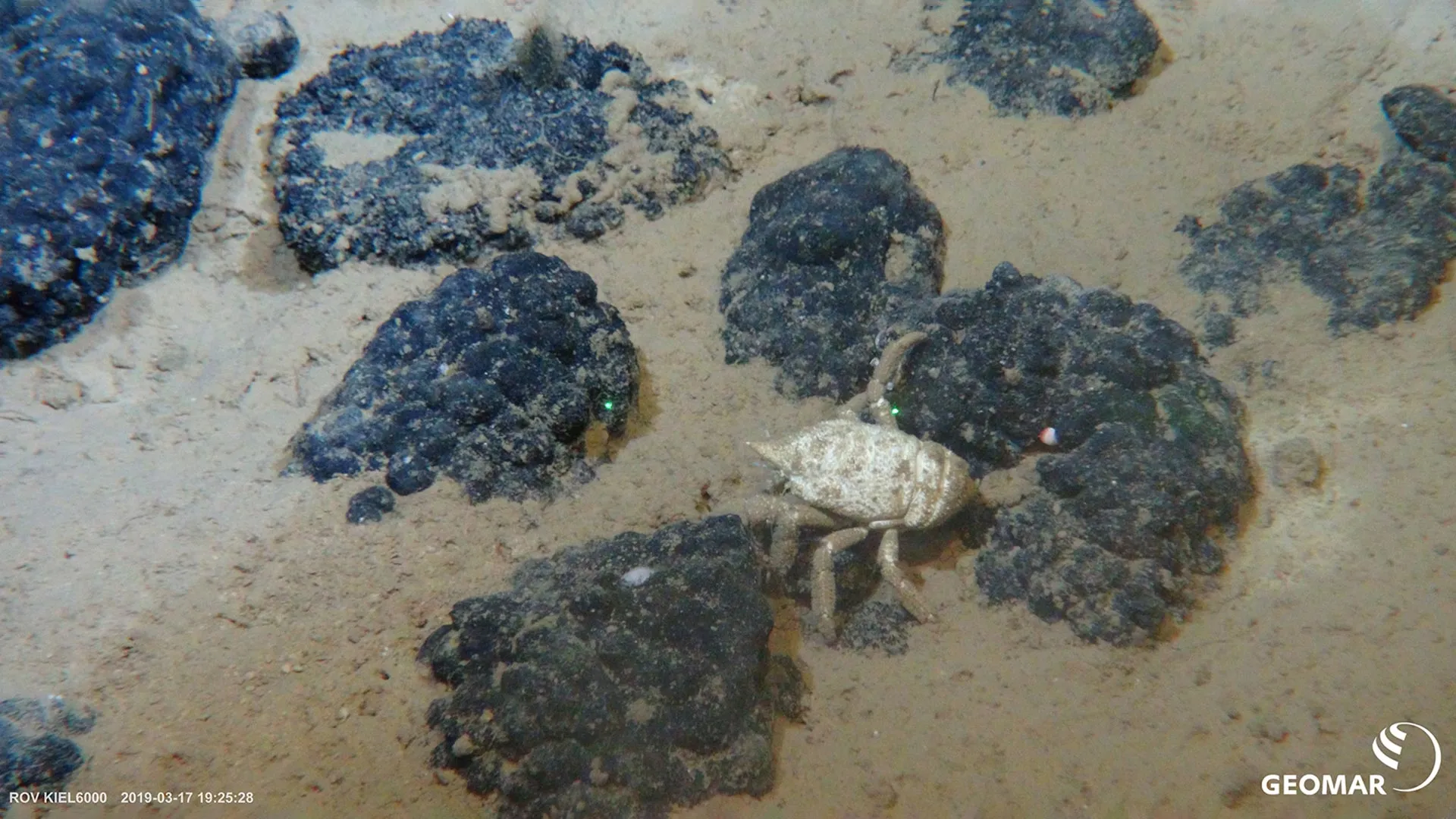
Beneath the surface of the central Pacific, a team of marine ecologists has revealed that a single fist-sized rock on the seafloor can shelter hundreds of tiny creatures. The finding, reported by researchers at MARUM, the Center for Marine Environmental Sciences at the University of Bremen, points to a hidden layer of deep-ocean biodiversity that had gone largely unexplored.
The rocks in question are polymetallic nodules, dark formations of iron and manganese oxides that sit at depths of 4,000 to 6,000 meters. They grow by mere millimeters over millions of years and can persist on the seafloor for vast stretches of time. Unlike the soft mud that dominates their surroundings, the nodules offer firm surfaces and, crucially, internal cracks and cavities that create three-dimensional microhabitats for animals smaller than a millimeter.
To investigate what lived inside these ancient formations, the research team gathered nodules from the Clarion-Clipperton Zone using box corers and remotely operated submersibles. Back in the laboratory, they carefully split the rocks open and catalogued the organisms hiding in their crevices. Across 244 samples, the team counted 4,139 individual animals, averaging 17 per nodule. One exceptionally crowded rock contained 245 residents.
Genetic analysis showed that the animal communities inside the nodules were distinctly different from those in the adjacent sediment, yet remarkably similar to one another even at sites up to 1,000 kilometers apart. For nematodes, the nodule population equaled roughly ten percent of the local sediment count; for copepods, about a quarter. A single-celled organism called Thurammina sp. 1 appeared particularly well suited to life within the rocks.
Mining threats to ancient habitats
The discovery carries significant implications for the growing interest in deep-sea mining. The nodules contain commercially valuable metals such as nickel, cobalt, and copper, and industrial operations would remove them directly from the seafloor. Because new nodules require millions of years to develop, harvesting them could eliminate habitats that no human timescale could restore, according to study co-author Sabine Gollner.
Researchers are still working out whether some of the nodule-dwelling species exist elsewhere in the ocean. If they do not, their removal could spell global extinction. Dr. Tanja Stratmann, one of the study's lead authors, is currently aboard an international expedition to the Clarion-Clipperton Zone, funded through the JPIOcean MiningImpact projects, to gather further data on these fragile ecosystems before they are potentially lost forever.