Ocean life
Wild oysters reproduce in Scotland after century away
Marine researchers confirmed juvenile European flat oysters are thriving in the Dornoch Firth following targeted reintroduction efforts.
Reported by The Guardian · · 2 min read
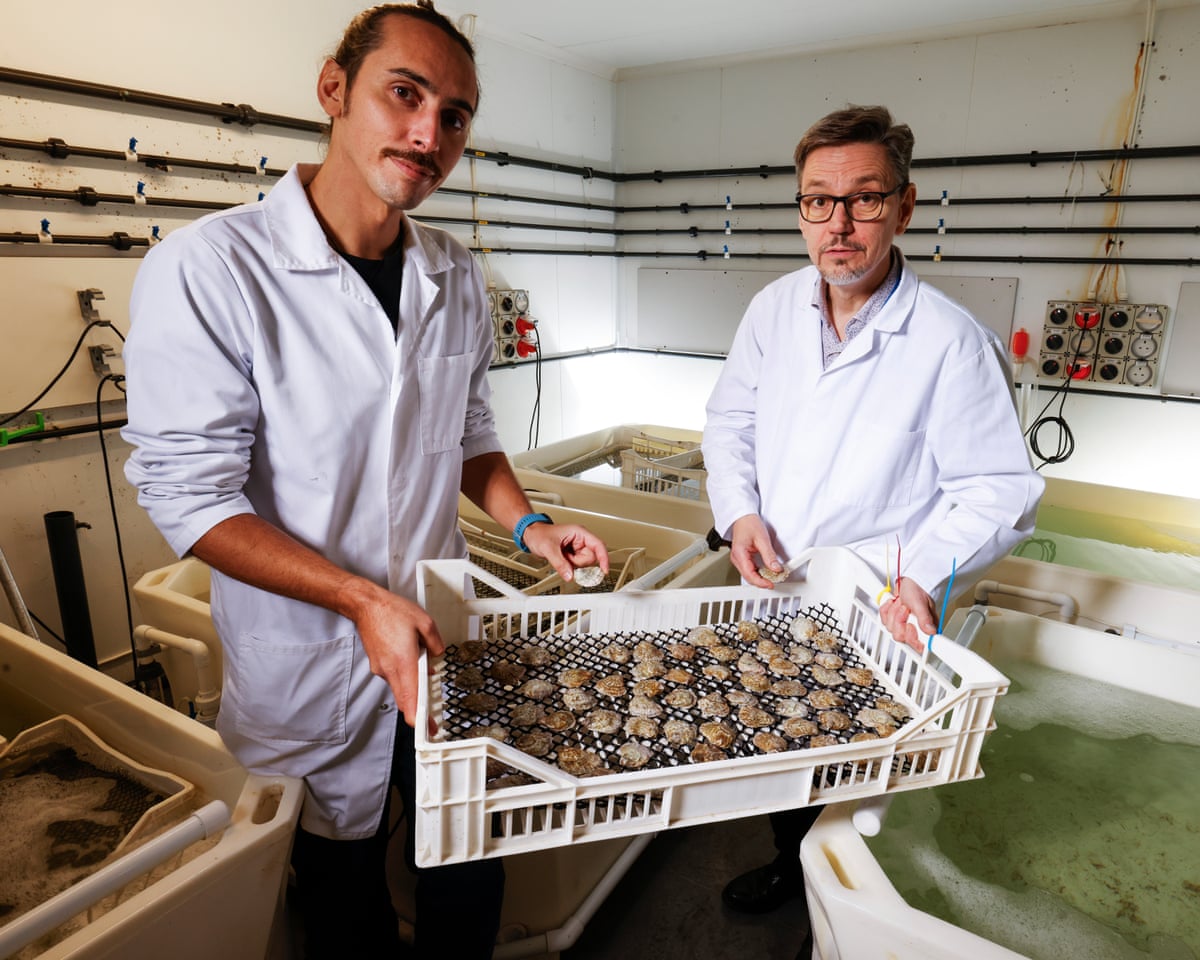
Marine scientists in northeastern Scotland have recorded juvenile European flat oysters reproducing in the wild at Dornoch Firth, marking the return of a shellfish that vanished from the area over a hundred years ago. Small young specimens, each roughly the dimension of a coin, confirm that introduced populations have begun spawning naturally in the coastal inlet north of Inverness.
The recovery is guided by the Dornoch Environmental Enhancement Project, a collaboration initiated twelve years ago between Heriot-Watt University, the Marine Conservation Society, and whisky producer Glenmorangie. Conservation workers have relocated approximately 140,000 adult bivalves into the firth. These specimens were gathered from Loch Ryan, home to one of Britain's remaining healthy beds, and manually scrubbed by volunteer teams prior to release to protect against foreign biological contaminants.
Centuries ago, massive reefs of native shellfish flourished around the British coastline, sustaining varied underwater ecosystems. However, intense commercial harvesting during the nineteenth century, coupled with railway networks distributing hauls to booming industrial towns, wiped out most natural grounds. At its height, a single fishery in the Firth of Forth yielded 30 million oysters annually before entirely collapsing. Today, European flat oysters remain listed as critically endangered, while commercial dining relies heavily on farmed Pacific varieties.
Ecologists emphasize that restored reefs act as environmental engineers. By anchoring seabed sediment and filtering seawater, living colonies dramatically boost local biodiversity. Bill Sanderson, a biodiversity professor at Heriot-Watt University who directs the initiative, noted that establishing an active reef can double bottom-dwelling species diversity within ten years while capturing carbon. Research associate Gurjameer Ramday, who detected the juveniles, observed that recent warmer ocean conditions aided their development.
Organizers intend to introduce additional stock until the overall colony approaches four million individuals, creating a self-sustaining population by 2031 where juvenile recruitment outpaces predation by crabs and sea stars. While commercial harvesting remains distant and challenges like marine pollution and bottom trawling persist, researchers view the Scottish breakthrough as valuable encouragement for more than ten similar marine restoration initiatives underway across the United Kingdom.