Reptiles and amphibians
Prehistoric dinosaurs may have dined on coastal seaweed
Fossilized teeth reveal that ancient creatures living along North American shores regularly supplemented their plant diets with washed-up marine vegetation.
Reported by ScienceDaily · · 2 min read
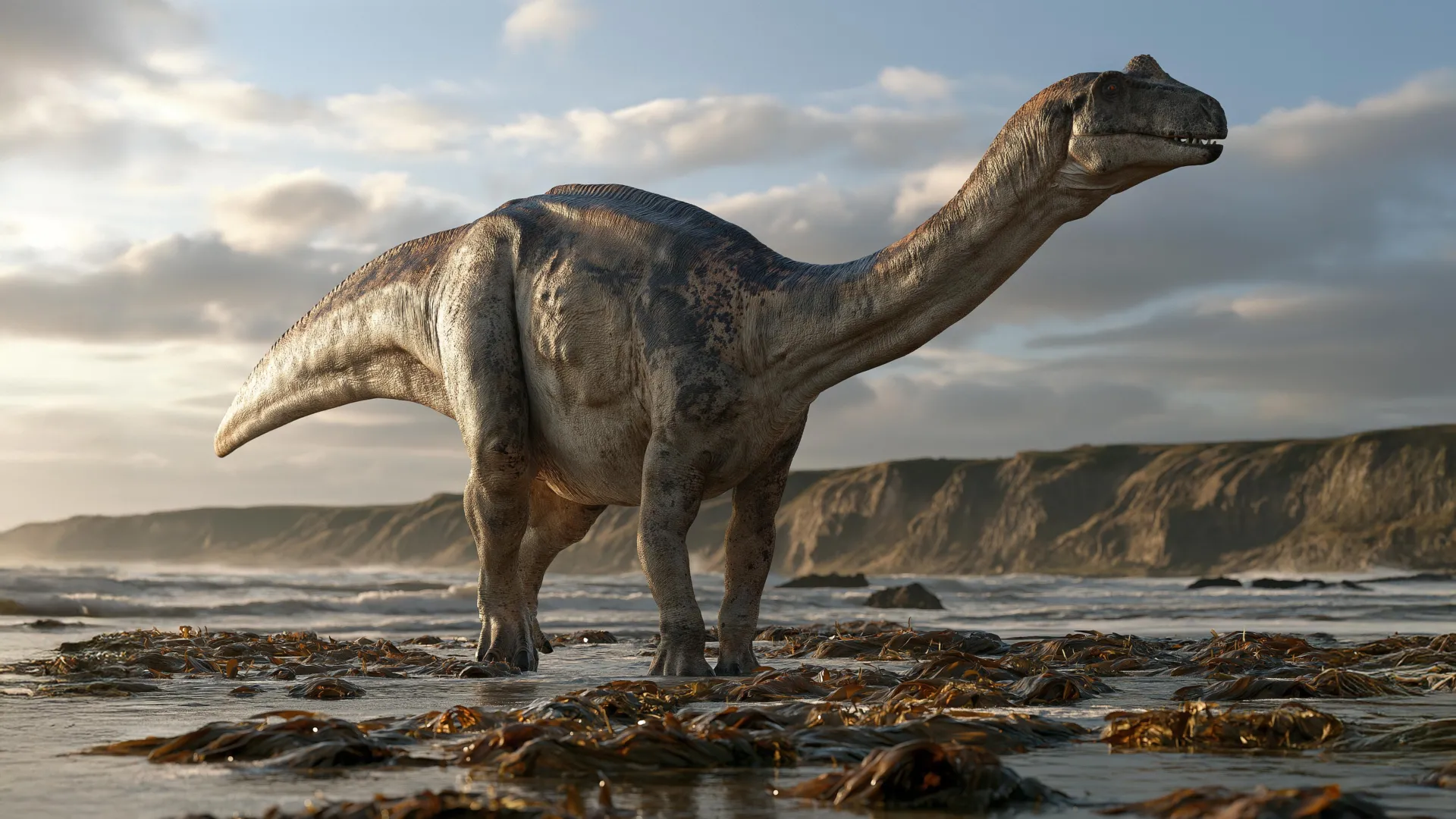
Plant-eating dinosaurs that roamed prehistoric shorelines might have regularly consumed ocean plants washed ashore by tides and storms, according to a recent investigation. By analyzing the chemistry locked inside preserved teeth, scientists discovered evidence that marine nutrients significantly shaped ancient terrestrial diets roughly one hundred million years ago.
In modern ecosystems, beach strandings of marine vegetation provide vital foraging opportunities for land animals during periods of scarcity. The new study, documented in Frontiers in Ecology and Evolution, suggests this coastal transfer also flourished throughout the Cretaceous period. University of Arkansas researcher Clayton Forster led a team examining specimens from formations surrounding the ancient Western Interior Seaway alongside the prehistoric Gulf of Mexico.
To track dietary origins, the authors measured carbon isotopes preserved within the fossilized dental material of dinosaurs, ancient fish, and crocodiles. Because marine vegetation naturally holds heavier carbon isotope ratios than terrestrial flora, animals that ingest ocean flora retain elevated isotopic signatures. Researchers contrasted specimens collected along ancient shorelines against fossils gathered from far inland environments across two Cretaceous intervals spanning between 113 and 96 million years ago.
The measurements showed that coastal specimens consistently possessed elevated isotopic values compared to their landlocked counterparts. Because these elevated signatures appeared across diverse species ranging from aquatic animals to gigantic terrestrial herbivores, investigators reasoned that the nutrient source must sit at the bottom of the food web. Ocean algae and marine plants emerged as the most probable explanation for the widespread pattern.
However, not every species shared this dining habit. The large herbivore Tenontosaurus tilletti yielded carbon readings matching modern terrestrial grazers, indicating that it bypassed marine offerings entirely. Researchers noted that such variations between coexisting species confirm that the chemical signals represent real feeding behaviors rather than mineral changes occurring after fossilization.
While specimens from extreme latitudes remain unexamined, the research demonstrates that interactions between land and sea have shaped animal survival for hundreds of millions of years. Future inquiries may examine whether similar dietary connections linked coastal habitats during older epochs, such as the Jurassic.