Ocean life
Early animals may have arisen earlier than thought
Oxford researchers find that animals might have emerged between 800 and 700 million years ago, challenging previous timeline limits.
Reported by ScienceDaily · · 2 min read
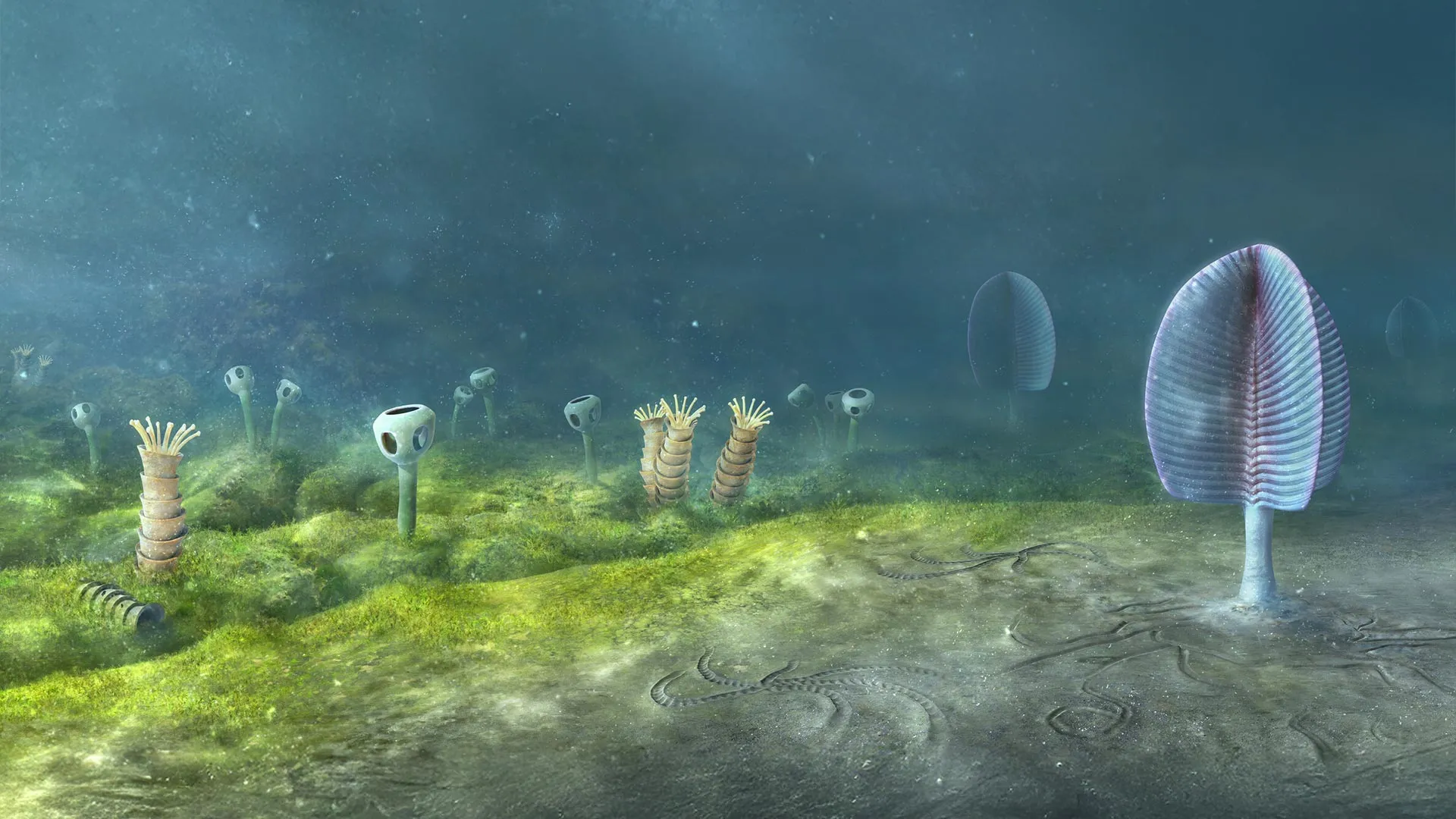
Animals might have first evolved up to 200 million years before their clear appearance in ancient rock strata, according to an international study directed by Oxford University. Published in Science Advances, the findings suggest the kingdom could have originated deep within the Neoproterozoic Era, potentially before the onset of global glacial events.
Historically, researchers used the 590-million-year-old Weng'an Biota in China to establish an upper age boundary for animal emergence. Because that Ediacaran deposit preserved microscopic life in intricate detail without displaying definitive animal remains, scientists long reasoned that animals must have arisen only after those sediments settled.
The authors tested this logic by inspecting exceptionally preserved microfossils from Mongolia's Kheseen Biota. Formed over 40 million years after Weng'an, the Kheseen site dates to a period when animals are already confirmed elsewhere globally, such as in Namibia and southern China. However, scanning electron microscopy of over 140 Kheseen samples revealed spiny acritarchs and embryo-like specimens, but no clear animal fossils whatsoever.
Rethinking the fossil record
Senior author Ross Anderson explained that the Mongolian findings dismantle the idea that lack of animals in Weng'an proves they did not exist yet. Animals were clearly alive when Kheseen formed, yet they failed to fossilize there, likely because they inhabited different settings or because local chemistry did not favor animal preservation.
Freed from the Weng'an limit, the scientists evaluated older deposits from Norway, Australia, and Arizona spanning 850 to 730 million years ago. Applying these ancient strata as calibration points in molecular clock models, the team calculated that animals may have arisen between 800 and 700 million years ago.
The earliest species were likely tiny, soft-bodied creatures lacking rigid skeletons, making fossilization exceedingly improbable. If correct, this extended timeline indicates animals lived before or during the Cryogenian period, when planetary glaciations known as Snowball Earth began roughly 720 million years ago. Lead author Orin Lole Durbin noted that while older physical bodies remain unverified, the study substantially widens the potential timeline for animal life.