Insects and pollinators
Breeding programme revives New Zealand’s giant wētāpunga
A breeding programme has released 11,000 wētāpunga, believed to be the world’s heaviest insect, and the species’ population is now officially increasing.
Reported by The Guardian · · 1 min read
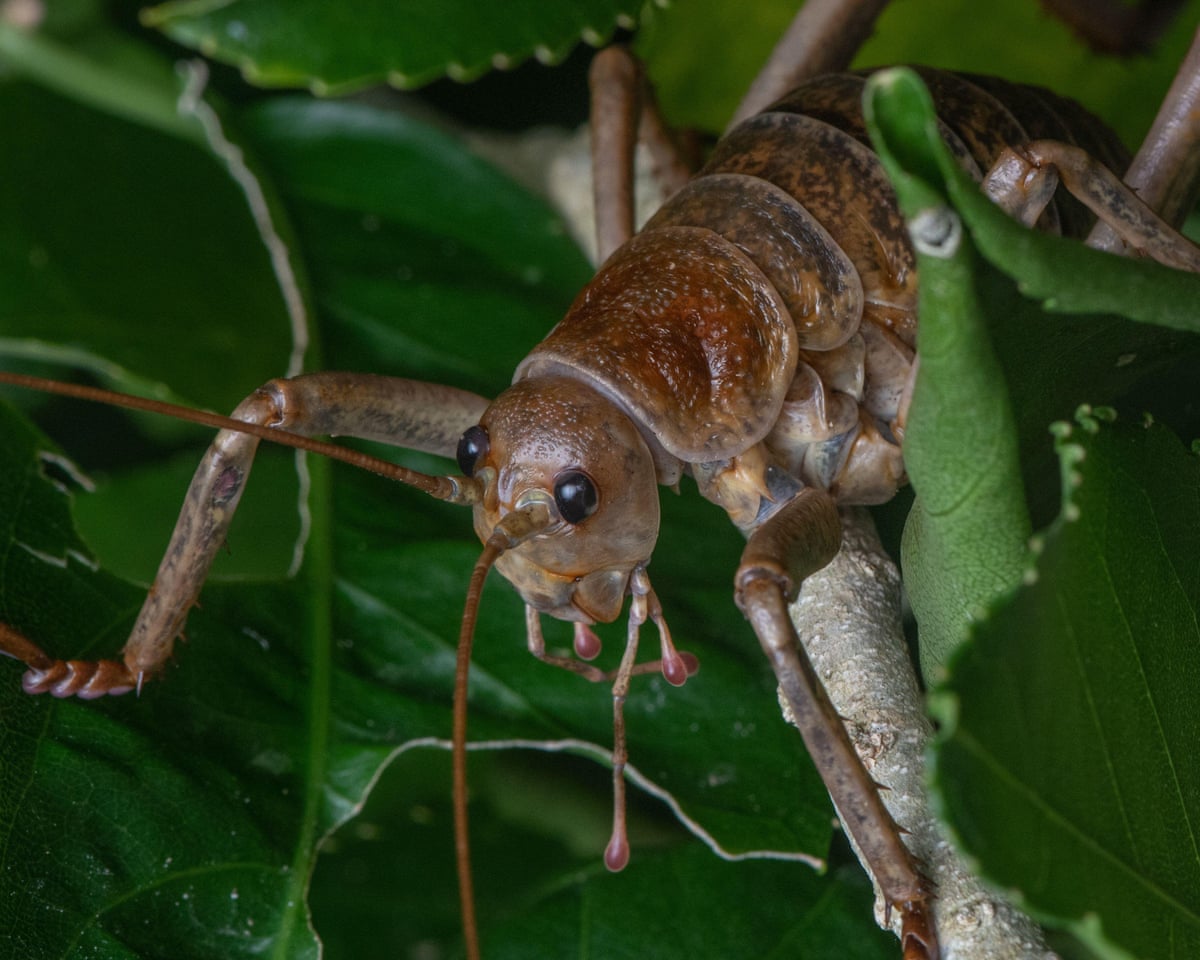
New Zealand’s wētāpunga, thought to be the heaviest insect on Earth, is making a comeback. A report released on 2 October says its population is now officially increasing, thanks to a breeding programme that has produced 11,000 insects for release into the wild.
The wētāpunga is the largest of New Zealand’s 70 wētā species. A female can weigh as much as a mouse, with a body up to 10 cm long and a leg span of up to 20 cm. It once lived across parts of the North Island, but introduced predators and the loss of its habitat wiped it out on the mainland, and by the 1990s it was classed as endangered. Today it survives mainly on predator-free islands in Auckland’s Hauraki Gulf and off the coast of Northland.
The recovery rests on rearing techniques first developed by Butterfly Creek and Auckland Zoo, which have since been scaled up so that large numbers can be raised together in communal creches. The young insects, called nymphs, are fed fresh foliage, fish-flake protein and leaf litter. The protein is critical for the survival of the youngest nymphs.
Dr Chris Green, an honorary researcher at the Department of Conservation who documented the project in the New Zealand Journal of Zoology, called the numbers extraordinary and said the future of the wētāpunga is looking bright.


