Birds
Research sheds light on New Zealand forest penguins
Long-term monitoring in Fiordland reveals that elusive crested penguins nest alone in dense woods and undertake massive oceanic journeys to feed.
Reported by The Guardian · · 2 min read
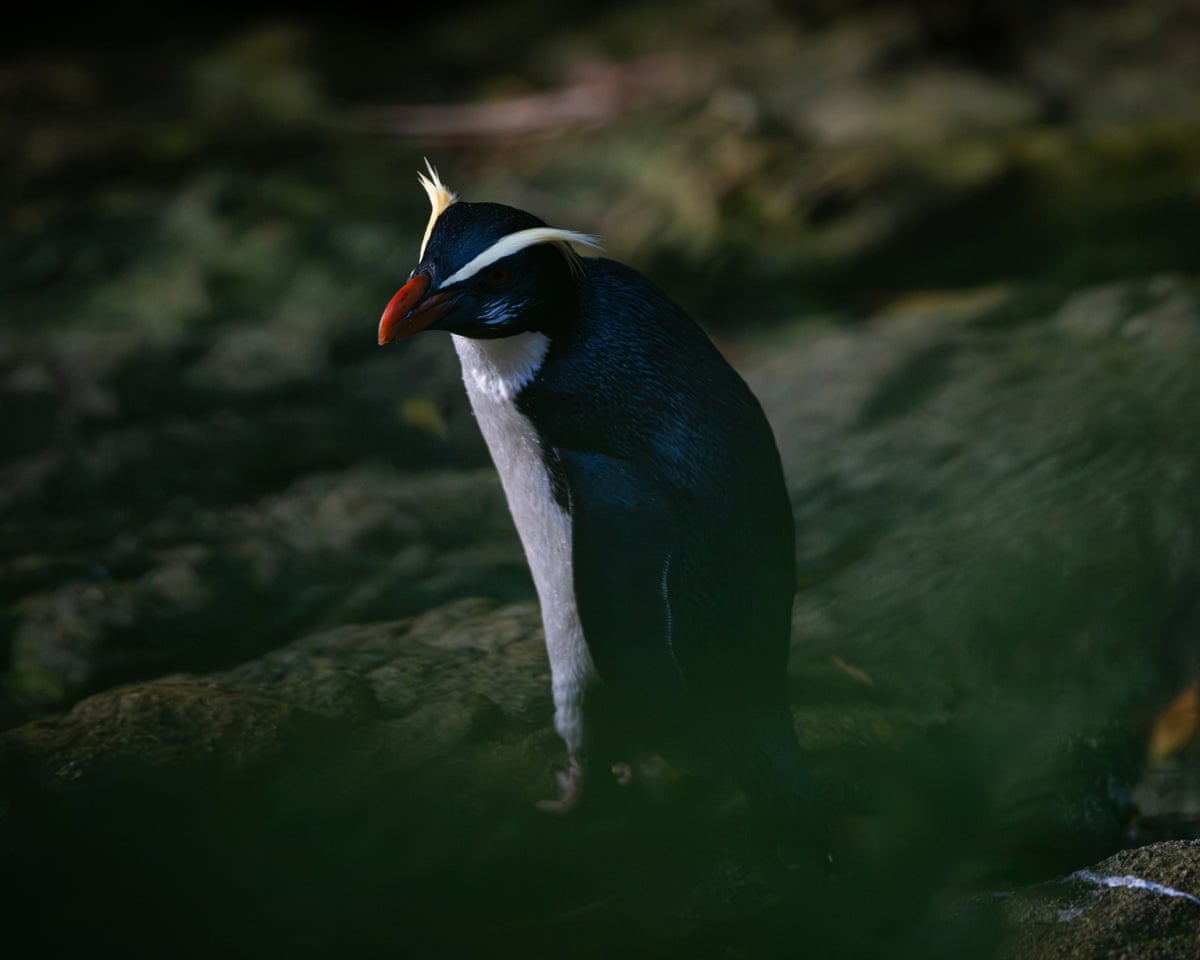
Scientists tracking the Fiordland crested penguin, locally known as the tawaki, are uncovering previously unknown details regarding the secretive bird. Standing roughly half a meter tall and distinguished by bright yellow crests above their eyes, these seabirds inhabit the rugged wilderness of southwestern New Zealand, where their unusual behavior has long puzzled naturalists.
Unlike most related species that gather in massive coastal colonies, tawaki raise their young in isolated burrows hidden within thick rainforests, occasionally perched high up steep terrain. Researchers from the Tawaki Project, founded in 2014 by Dr. Thomas Mattern and Ursula Ellenberg, have spent years documenting these secluded nesting sites across nine separate fjords.
Recent counting efforts indicate that the wild population is approximately three times higher than older records estimated. Over twelve years, field teams supported by local volunteers and boat operators have mapped 1,200 nests. Improved data led the IUCN Red List to reclassify the species from vulnerable to near-threatened in 2020, estimating mature numbers between 12,000 and 15,000 birds.
Long journeys and hidden nests
The birds also exhibit puzzling foraging habits. While some individuals catch prey inside sheltered waterways, others venture into open ocean waters. Most strikingly, after the breeding period concludes in December, adult birds embark on an extensive round trip spanning between 5,000 and 7,000 kilometers toward sub-Antarctic waters to build fat reserves before their annual complete feather shed.
Mattern suggested that this exhausting migration occurs despite plentiful food near their home territories, likely driven by an ancestral impulse shared with other crested penguins. Because the birds lose every feather at once during their moult, accumulating adequate body mass beforehand remains critical to their survival.
Despite encouraging population estimates, scientists emphasize that significant hazards persist, particularly from commercial fisheries operating in foraging regions. Project members continue tracking survival rates to establish whether numbers are holding steady and to identify when additional conservation measures might become necessary.