Birds
Painting wind turbine blades cuts bird deaths
A Spanish wind farm experiment shows that coating a single rotor blade in dark paint significantly lowers fatal avian collisions.
Reported by Mongabay · · 2 min read
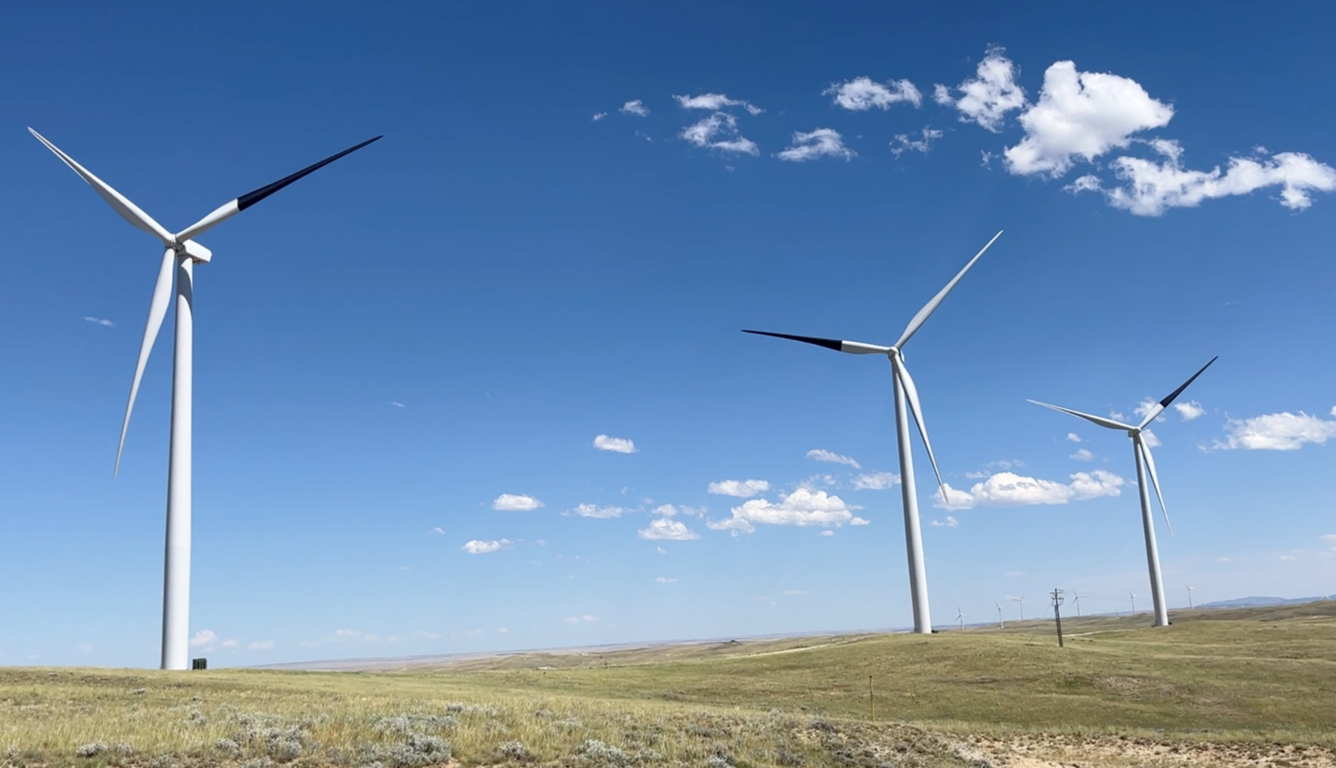
Rotating wind turbines often present a hazard to flying wildlife because their rapid motion turns pale surfaces into an indistinct visual blur. Biologists believe this visual effect prevents approaching animals from recognizing the moving hazard in time to change course. Applying contrasting color to an individual blade breaks up that visual smear, helping animals detect the structure in flight.
A multi-year investigation in Cadiz, Spain, tested this simple adjustment at the El Ruedo energy facility operated by Acciona Energía. Facility staff applied dark paint to a single blade across four separate towers between 2020 and 2021, leaving sixteen standard white units untouched as a benchmark. Field teams inspected the ground beneath all twenty installations daily between 2012 and 2024 to document any animal casualties.
Promising drop in mortality
Comparing the long-term findings revealed that annual avian losses beneath the altered equipment declined by roughly 74 percent compared with the standard structures. The outcome mirrors earlier trials conducted in other countries. A prior project in Norway achieved a drop exceeding 70 percent with dark paint, and a South African test utilizing red pigment observed an 83 percent reduction. Conversely, an assessment in the Netherlands recorded no meaningful difference.
In the United States, turbine strikes claim up to one million avian lives annually, a figure exceeded by collisions with glass structures and predatory domestic felines. Nevertheless, the continuing buildout of renewable infrastructure poses growing hazards to migrating songbirds, raptors, and soaring species, according to research leader Roel May of the Norwegian Institute for Nature Research.
Challenges for wider adoption
May noted that long-lived avian species with modest reproductive output face the greatest vulnerability from unexpected losses. While altering existing equipment in the field proved technically complex and costly in Cadiz, applying pigments during factory construction offers an economical alternative. However, equipment makers express hesitation regarding potential surface temperature gains or weight shifts caused by darker materials.
Although existing trials have remained limited in overall scale, researchers encourage clean energy operators to implement the visual adaptation broadly across new developments. Continued observation would allow operators to refine the protective method while expanding generation capacity.