Wild mammals
Meet the Texas Kangaroo Rat
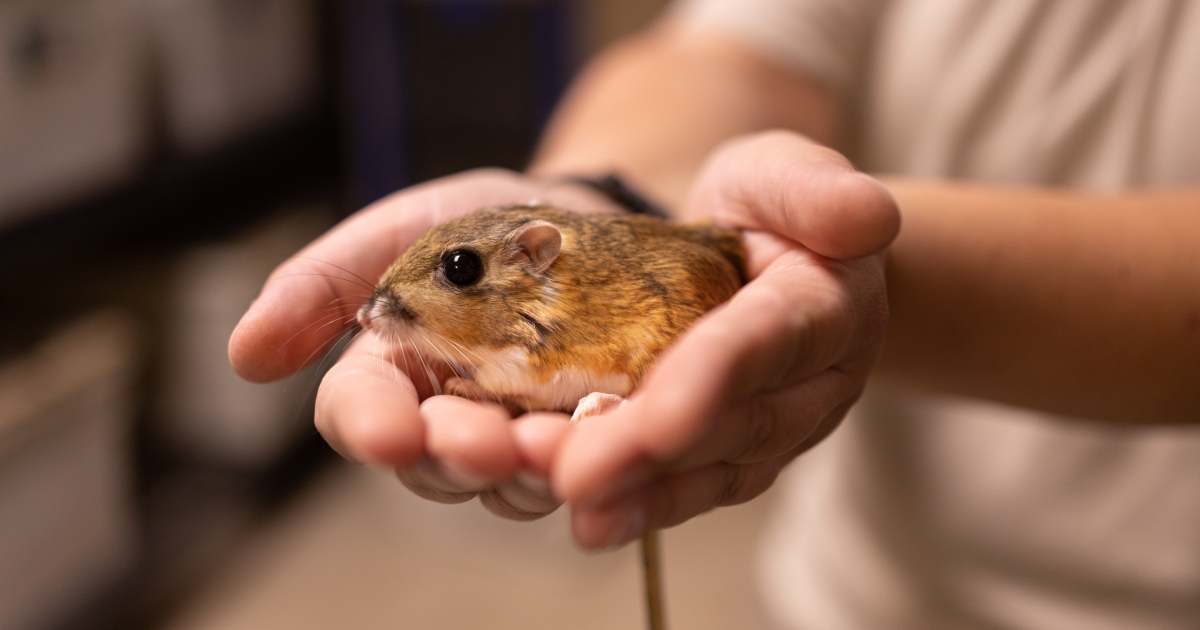
Not quite, but this hopping rodent might convince you otherwise. Despite its name, this mammal looks more like a gerbil than a rat.
Reported by U.S. Fish and Wildlife Service · · 6 min read
Kangaroos in Texas?
Not quite, but this hopping rodent might convince you otherwise. Despite its name, this mammal looks more like a gerbil than a rat. This tiny Texan is cuter than you might have imagined and is winning over the hearts of conservationists across its historical range. Conservation partners across Texas are working hard to help its populations bounce back.
The Texas kangaroo rat ( Dipodomys elator ) is a small nocturnal rodent that may resemble a rat from a distance, yet acts like a kangaroo by hopping on its hind legs, sometimes several feet when escaping a predator. Reaching up to 13.75 inches in length, these rodents get more than half of that from their long tail, which ends in a distinctive white tuft of fur. It is one of 23 known kangaroo rat species. Unlike many others, the Texas kangaroo rat is unique in that it has four toes instead of five on each hind foot.
This species can be hard to spot, given it is a nocturnal mammal that hides in underground burrows, an important adaptation for surviving the heat and dryness of its arid environment. However, private landowners in North Central Texas will tell you that they have seen these animals hopping down dirt roads at all hours of the night. Around its burrows, where short grass and bare ground are common, the Texas kangaroo rat enjoys nightly dust bathing, a behavior that involves rolling in dirt, dust, or sand in order to remove parasites and improve hygiene.
This native Texan is uniquely adapted to the Rolling Plains it calls home. Its diet consists mostly of seeds and the occasional bit of green vegetation. Like other kangaroo rats, it obtains all the moisture it needs from its food and never needs to drink water. Its large external cheek pouches allow it to gather substantial amounts of food in one trip. The Texas kangaroo rat collects this gathered food in its burrows, a key survival strategy that helps it endure months long periods when food is scarce.
On the brink of endangerment
Originally discovered in 1894 in Clay County, Texas, the Texas kangaroo rat has been documented in eleven North Central Texas counties and two neighboring Oklahoma counties. Since 2000, this species has only been confirmed in five of those counties, all in Texas.
Due to its shrinking range and scarcity, many biologists and wildlife experts believe the Texas kangaroo rat is at risk of extinction. This is not a new concern. The Texas kangaroo rat was listed as a threatened species in 1977 under Texas state law and petitioned for federal listing in 2010 under the Endangered Species Act. Over the past decade, the species has had a wealth of experts researching its population size, habitat needs, and long-term outlook.
Partnerships as big as Texas
Beginning in 2018, the U.S. Fish and Wildlife Service partnered with the Fort Worth Zoo and academic researchers to establish a captive population of the Texas kangaroo rat. Working alongside the Texas Parks and Wildlife Department (TPWD), the Service has supported research at the Fort Worth Zoo to help understand its reproductive biology and develop a propagation program that could eventually boost wild populations with Zoo-raised animals.
The Fort Worth Zoo now maintains a small population of Texas kangaroo rats, with their first successful breeding effort occurring in 2021. “This species can be very territorial and very individualistic, so breeding them can be a challenge,” says Allison Julien, a reproductive biologist at the Fort Worth Zoo, who is contributing to the conservation efforts of the Texas kangaroo rats. Although the species has proven difficult to breed, zoo staff continue their attempts to help the Texas kangaroo rat bounce back.
In the wild, Texas kangaroo rats have a lifespan of only about two to three years. However, under the Fort Worth Zoo’s care where there are no predators and individual rats receive a healthy diet, the mammals may live for up to seven years. This increased lifespan helps the Zoo learn more about the biology and behavior of the mammal and helps guide future releases into the wild.
Texans helping Texas Wildlife
Growing concern over the rarity of this species and loss of its preferred habitat led biologists from the Service and TPWD to look for more ways to help. In 2022, TPWD proposed a Candidate Conservation Agreement with Assurances (CCAA). CCAAs (now referred to as Conservation Benefit Agreements ) are voluntary agreements that incentivize private landowners to conserve species that are at risk, while protecting private property rights.
For the Texas kangaroo rat, the goal of the CCAA is to support collaboration between federal and state governments and private landowners within the Texas kangaroo rat’s historical range to help protect the species and its habitat. Importantly, the CCAA provides regulatory certainty to the agricultural industry for those in the historical range of the Texas kangaroo rat. Property owners are guaranteed that no additional conservation measures, other than those already agreed upon, would be required if the species becomes listed as endangered.
Conservationists at the TPWD and the Service believe that more private landowners enrolling in this agreement will help boost kangaroo rat populations by connecting habitat patches across its range – a necessary “jumpstart” for recovery.
“The beauty of management for the Texas kangaroo rat is that the actions that it requires are already compatible with [cattle] ranching and most of the land uses you see in this region” says Darren Proppe, a biologist at the TPWD working on research for the Texas kangaroo rat’s CCAA. “In fact, having cattle on land can be beneficial because it maintains areas of bare ground and sparse cover that are utilized by the Texas kangaroo rat.”
At its core, this voluntary agreement is about working with private landowners in the Texas kangaroo rat’s historical region to help conserve habitats while supporting working lands. The agreement promotes good land stewardship through prescribed grazing, prescribed fire, range planting and reseeding, and brush management. Participation in this agreement does not require every conservation practice and can be tailored to existing land uses while providing measurable benefits to the Texas kangaroo rat.
Charting a roadmap to recovery
The Texas kangaroo rat faces a shrinking range and an uncertain future, yet Texans are building a path back. Conservationists, landowners, researchers, and wildlife managers are working together to give the species its best chance at long-term recovery. From prairie grasslands and ranches to zoo breeding facilities, conservation partners are joining forces to give this small native mammal a fighting chance.
“This little species has been hanging on for a long time and now it finally has a team in its corner,” said Jennifer Khan, a Service fish and wildlife biologist. “By working together, we can give the Texas kangaroo rat a real shot at recovery.”
As momentum grows, so does the hope that more Texans will join in these efforts. Saving the Texas kangaroo rat will take teamwork and might just need partnerships as big as Texas. After all, everything is bigger in Texas... except the kangaroos.
To learn how landowners can help this tiny Texan through the voluntary CCAA, visit: Texas Kangaroo Rat Candidate Conservation Agreement with Assurances
Field guide: Texas kangaroo rat (Dipodomys elator)
The story above is about conservation partners working to bring this small Texan rodent back. Here is what it says about the animal itself, organized so you can recognize it, check a sighting and tell it from what it can be mistaken for.
How to recognize it, step by step
Start with the place
It lives in the Rolling Plains of North Central Texas. It has been documented in eleven North Central Texas counties and two neighboring Oklahoma counties, but since 2000 it has only been confirmed in five of them, all in Texas.
Think of the hour
It is nocturnal. Private landowners in North Central Texas report seeing it hopping down dirt roads at all hours of the night.
Watch how it moves
It hops on its hind legs like a kangaroo, sometimes several feet at a time when escaping a predator.
Then the tail
It reaches up to 13.75 inches in length, and more than half of that is its long tail, which ends in a distinctive white tuft of fur.
If you could see a hind foot
The Texas kangaroo rat has four toes instead of five on each hind foot, which the story says sets it apart from many other kangaroo rat species.
Do not expect to see it easily
It hides in underground burrows, where short grass and bare ground are common around the entrance. It does not need to drink: it gets all the moisture it needs from its food.
Could it have been a Texas kangaroo rat?
Answer what you saw. Each answer is compared with what the story says about the animal. Leave blank what you did not notice.
Your result
Answer at least three questions
With fewer answers there is nothing to compare yet.
Compare it with what it resembles
The story says it may resemble a rat from a distance but looks more like a gerbil, and it places it among 23 known kangaroo rat species. This is everything it says about each, side by side.
Texas kangaroo rat Dipodomys elator
- Size
- Up to 13.75 inches long, more than half of it tail
- Tail
- Long, ending in a distinctive white tuft of fur
- Hind feet
- Four toes on each, instead of five
- Movement
- Hops on its hind legs, sometimes several feet when escaping a predator
- Activity
- Nocturnal; hides in underground burrows
- Habitat
- Rolling Plains; short grass and bare ground around its burrows
- Status
- Listed as threatened under Texas state law in 1977; petitioned for federal listing in 2010
Rat or gerbil
- In the story
- The Texas kangaroo rat may resemble a rat from a distance, but looks more like a gerbil than a rat
- Its own marks
- Hopping on its hind legs, a long tail with a white tuft and four toes on each hind foot
Other kangaroo rats
- How many
- 23 known species, the Texas kangaroo rat among them
- Hind feet
- The story says that, unlike many others, the Texas kangaroo rat has four toes instead of five
- Water
- Like other kangaroo rats, it gets all the moisture it needs from its food and never needs to drink
Every line comes from the story linked below; where the story says nothing, this guide says nothing. The story names no other animal that could be mistaken for a Texas kangaroo rat and does not explain how to tell it from other rodents beyond the marks listed here, so a regional field guide or your state wildlife agency is still worth consulting.
Texas kangaroo rat: questions and answers
What does a Texas kangaroo rat look like?
It is a small nocturnal rodent that may resemble a rat from a distance, though the story says it looks more like a gerbil. It reaches up to 13.75 inches in length, more than half of that in a long tail that ends in a distinctive white tuft of fur.
Why is it called a kangaroo rat?
Because it acts like a kangaroo, hopping on its hind legs, sometimes several feet when escaping a predator.
Is it the only kind of kangaroo rat?
No. It is one of 23 known kangaroo rat species. The story says that, unlike many others, it has four toes instead of five on each hind foot.
Where and when can it be seen?
It is hard to spot: it is nocturnal and hides in underground burrows, an adaptation to the heat and dryness of its arid environment. Private landowners in North Central Texas say they have seen it hopping down dirt roads at all hours of the night. Around its burrows, short grass and bare ground are common, and it takes nightly dust baths there to remove parasites and improve hygiene.
What does it eat? Does it drink?
Its diet is mostly seeds and the occasional bit of green vegetation. Like other kangaroo rats it gets all the moisture it needs from its food and never needs to drink. Its large external cheek pouches let it gather a lot of food in one trip, and it stores the food in its burrows to endure months-long periods when food is scarce.
Where does it live?
In the Rolling Plains of North Central Texas. It was first discovered in 1894 in Clay County, Texas, and has been documented in eleven North Central Texas counties and two neighboring Oklahoma counties. Since 2000 it has only been confirmed in five of those counties, all in Texas.
Is it endangered?
Because of its shrinking range and scarcity, many biologists and wildlife experts believe it is at risk of extinction. It was listed as a threatened species in 1977 under Texas state law and was petitioned for federal listing in 2010 under the Endangered Species Act. The story does not report a federal decision.
What is being done to help it?
Since 2018 the U.S. Fish and Wildlife Service has partnered with the Fort Worth Zoo and academic researchers to keep a captive population, with the first successful breeding in 2021. In the wild the animals live only about two to three years; at the zoo they may live up to seven. In 2022 the Texas Parks and Wildlife Department proposed a voluntary agreement for private landowners, which promotes prescribed grazing, prescribed fire, range planting and reseeding, and brush management. A department biologist says the actions it requires are already compatible with cattle ranching.
What should I do if I think I saw one?
Write down the place and the date and time. The story gives no guidance on handling the animal or reporting a sighting, so this guide gives none; the Texas Parks and Wildlife Department, which the story names as working on the species, can tell you what to do.
Facts about the species: U.S. Fish and Wildlife Service: fws.gov