Ocean life
Crown-of-thorns starfish may help reef recovery, study finds
New research reveals that controlled populations of coral-eating starfish could support biodiversity on Australia’s Great Barrier Reef.
Reported by ScienceDaily · · 1 min read
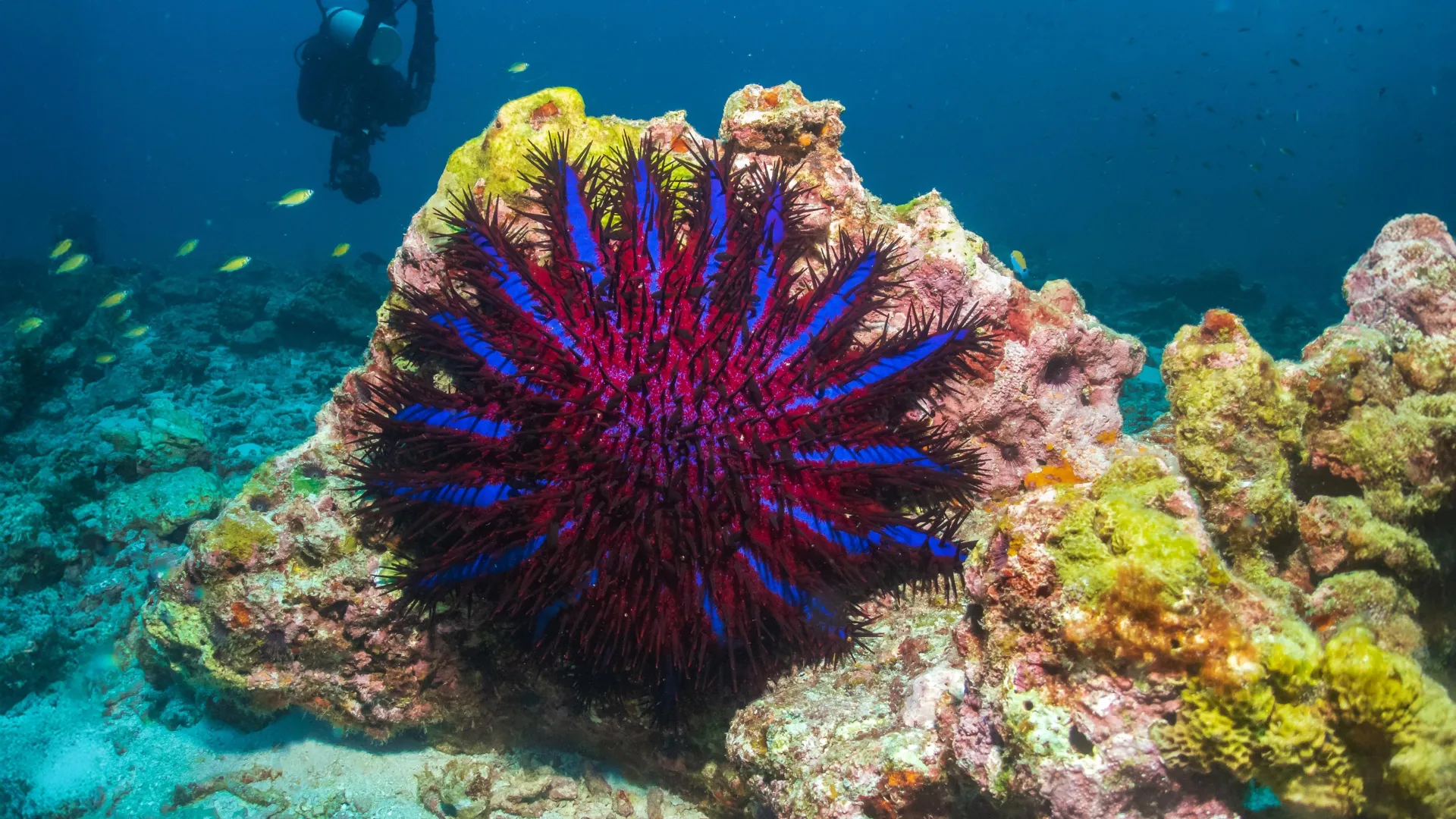
A long-held belief about the crown-of-thorns starfish has been challenged by new research on Australia’s Great Barrier Reef. These notorious coral predators, known for their sharp spines and destructive feeding habits, have long been seen as reef destroyers. However, scientists from the University of Sydney suggest they may play a surprising role in maintaining coral health when populations remain in check.
The study, published in *Ecology and Evolution*, examined feeding patterns of crown-of-thorns starfish in protected areas where natural predators like tritons and reef fish keep their numbers low. Researchers found that even when starfish consume coral, they rarely destroy entire colonies. Instead, they leave behind small fragments of living tissue, allowing some coral to survive.
Dr. Shawna Foo, lead researcher, explained that starfish typically feed in a controlled manner, leaving behind viable coral remnants. This contrasts with widespread outbreaks, where starfish can strip entire reef sections bare. The findings indicate that these starfish may help prevent certain fast-growing coral species from dominating the reef, thereby fostering greater biodiversity.
The study highlights a key ecological principle: moderate disturbances, like those caused by starfish, can prevent any single species from overwhelming the ecosystem. This aligns with the intermediate disturbance hypothesis, which suggests that ecosystems thrive when faced with occasional, balanced challenges rather than complete destruction.
While large outbreaks remain a threat, researchers caution that aggressive removal of starfish may not always be the best conservation strategy. Instead, they propose that once outbreaks are controlled, efforts should focus on maintaining natural predator populations to keep starfish numbers stable. This approach could help preserve reef health more effectively than total eradication.