Ocean life
Protected US sharks are captured for foreign aquariums
A regulatory exemption allows commercial suppliers to remove sand tiger sharks from Delaware Bay and export them to aquatic facilities across the globe.
Reported by The Guardian · · 1 min read
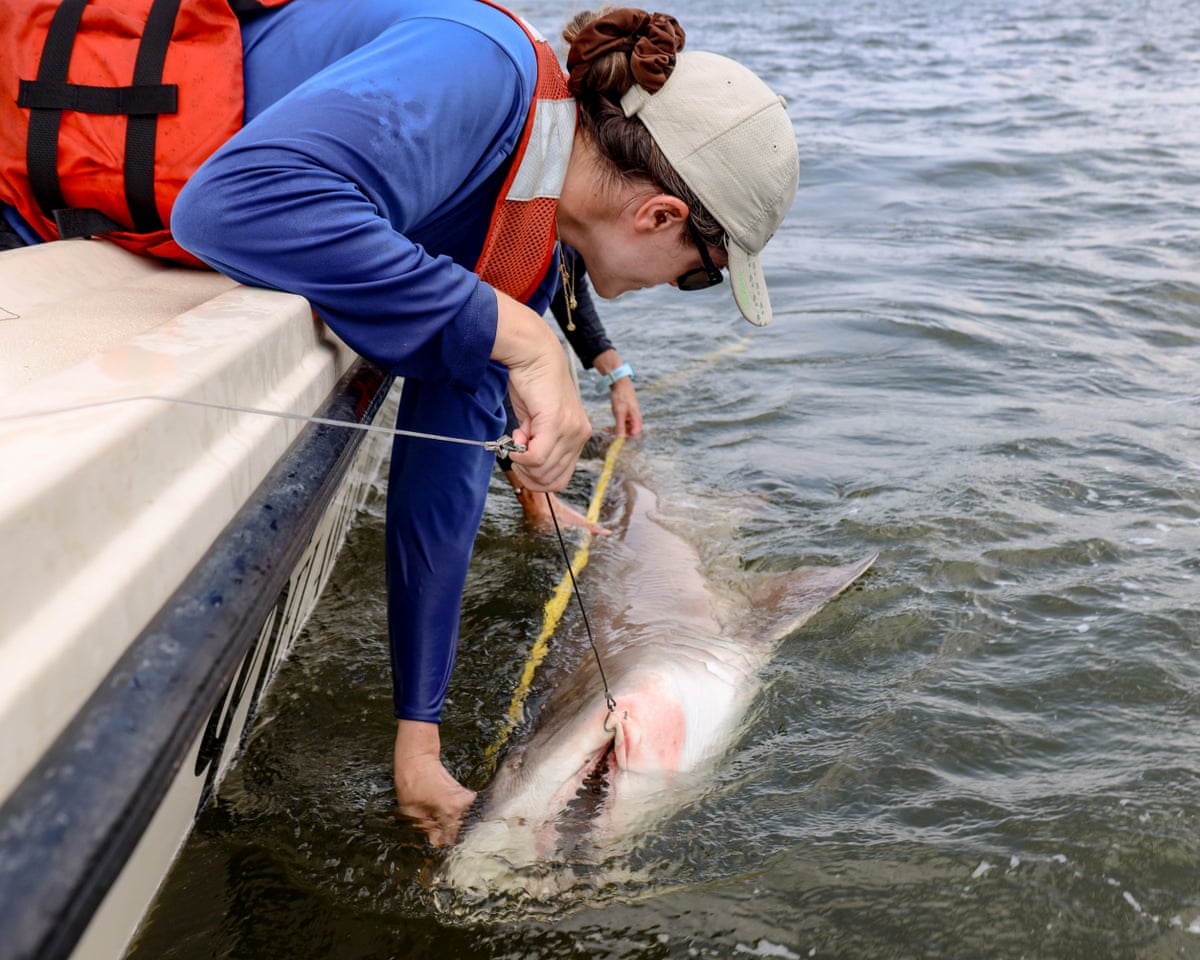
While recreational anglers face strict bans on keeping sand tiger sharks along the United States coast, private enterprises can legally extract them to supply foreign aquariums. Marine scientists report that dozens of these protected apex predators have been netted in Delaware Bay before being flown to commercial attractions overseas.
Data compiled by researchers from Delaware and Rhode Island universities reveal that removals increased rapidly in recent years. Between 2018 and 2024, collectors extracted 80 sharks from the estuary. Catch figures climbed from two individuals initially to 40 by 2023, with almost every animal exported to foreign destinations such as China and the United Arab Emirates.
Scientists involved in the investigation questioned the ethics of capitalizing on an American conservation triumph. One researcher noted that taking these protected predators resembles capturing wild wolves in Yellowstone to furnish foreign animal parks. Because sand tiger numbers have collapsed across the Arabian Sea, Southeast Asia, and Western Africa, overseas aquariums increasingly seek fish from the comparatively stable Northwest Atlantic.
The trade relies on federal exemptions and state collection permits. Florida firm Dynasty Marine accounted for most bay captures, taking 71 individuals between 2022 and 2024. While company representatives maintain that all operations obey government regulations and promote conservation education, researchers stress that neither state nor federal officials track whether the exported sharks survive in captivity.
Biologists are especially alarmed because sand tigers reproduce at exceptionally low rates. The species requires up to a decade to mature and produces only one or two pups every few years. Without a formal scientific census evaluating the total population in the region, researchers caution that continuous removals of mature and near-adult sharks could undermine decades of protective stewardship.