Reptiles and amphibians
Aldabra tortoise population reaches 180,000 on atoll
A multiyear survey shows the wild reptile group has made an extraordinary comeback, though rising seas and invasive predators still pose long-term risks.
Reported by The Guardian · · 2 min read
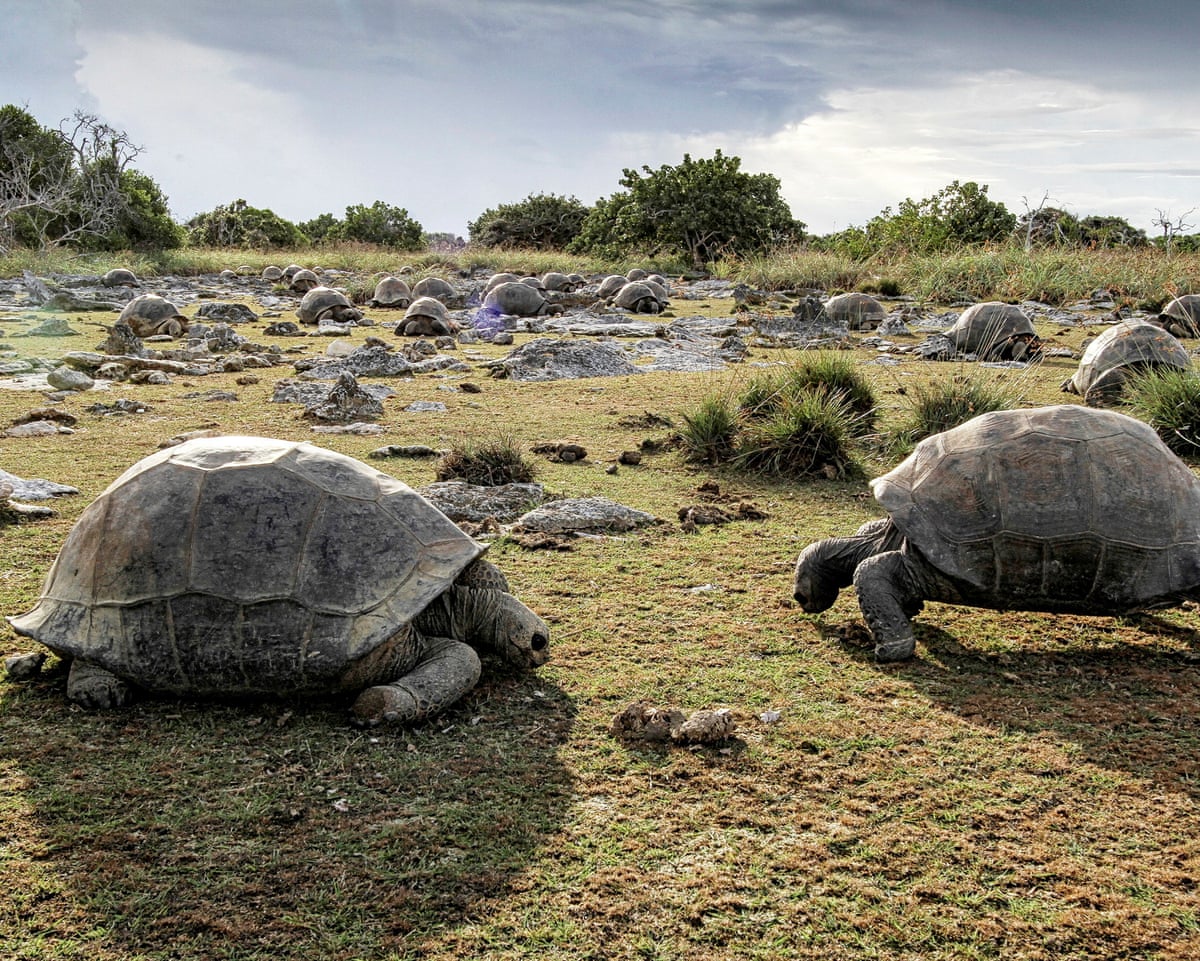
A new assessment of Aldabra giant tortoises on their native atoll in the Seychelles reveals that roughly 180,000 individuals now inhabit the landmass. Conducted jointly by local conservation managers at the Seychelles Islands Foundation and scientists from the University of Exeter, the comprehensive count marks the largest number ever documented for the species, easily surpassing the human tally across the island nation.
The findings, published in Ecology and Evolution, stem from five years of field surveys gathered from 2018 through 2022. Researchers concluded that the population remained comparatively steady over this timeframe, offering an optimal calculation of nearly 183,000 mature and developing tortoises. The work delivers the first official census revision since the late 1990s, when specialists estimated the herd at around 100,000.
Aldabra Atoll stands alongside Ecuador's Galápagos Islands as one of just two global locations hosting giant tortoises in natural wilderness, though the Galápagos sustains far fewer animals. During the nineteenth century, intense human exploitation decimated Aldabra's reptiles to fewer than one thousand specimens. Protective policies gradually turned the tide, culminating in legal status as a strict reserve in 1981 and Unesco recognition during 1982. Foundation chief Frauke Fleischer-Dogley explained that having so many reptiles roaming unhindered proves the value of sustained conservation investments.
Gathering precise data across the coral atoll presented major practical hurdles due to thick brush. Co-author Nancy Bunbury explained that investigators incorporated statistical models to account for animals hidden by foliage, thereby constructing a dependable benchmark to observe future demographic shifts over coming decades.
Despite the remarkable revival, scientists caution that significant hazards linger. Shifting regional weather patterns threaten to bring harsher and more regular dry spells, diminishing vital vegetative cover alongside foraging supplies. At the same time, rising ocean waters endanger lower sections of the coral terrain.
Predation by non-native mammals introduces additional stress. Unmanaged felines and black rodents frequently consume reptile eggs and newly emerged young. Specialists emphasize that scheduled campaigns to remove these introduced pests will be essential to foster continued herd expansion and strengthen the tortoises against worsening environmental volatility. Exeter researcher Dave Hudson emphasized that these figures represent a starting reference rather than a finished goal, intended to help wildlife authorities detect risks promptly.


