Habitats and conservation
World falls behind on 2030 biodiversity targets
Delegates meeting in Armenia face major setbacks in fulfilling international pledges to protect ecosystems and endangered species worldwide.
Reported by The Guardian · · 2 min read
Nearly four years after approving landmark global agreements to protect nature, nations are falling far behind on their conservation commitments as delegates gather in Yerevan, Armenia, for the Cop17 summit. Expectations for the conference remain muted as pre-summit evaluations show virtually no progress toward fulfilling international biodiversity objectives set for 2030.
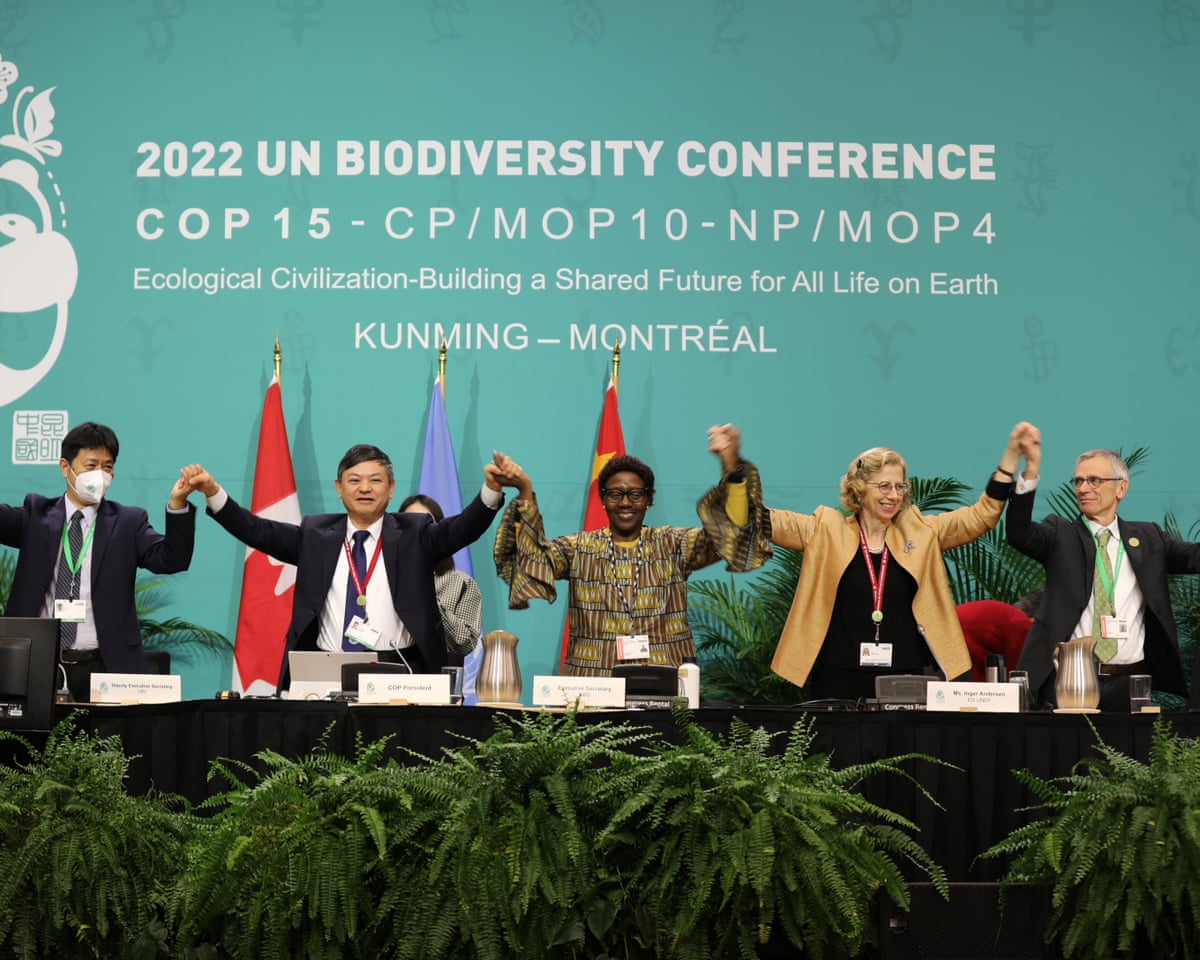
The original framework, settled at Cop15 in Montreal, Canada, brought together nearly every government apart from the Vatican and the United States. The pact outlined twenty-three specific measures, including pledges to safeguard thirty percent of land and marine territory, rehabilitate thirty percent of degraded habitats, and curtail five hundred billion dollars in environmentally harmful subsidies.
Widespread implementation gaps Preparatory findings for the Yerevan meeting indicate that national efforts have fallen drastically short across all categories. A tracking mechanism assessing global action shows predominantly negative or cautionary ratings. Pre-conference documentation warns that without immediate acceleration, countries will miss their 2030 benchmarks and imperil long-range goals intended for 2050.
Some targeted conservation work has moved forward under the agreement, such as initiatives in Kazakhstan to reintroduce Caspian tigers and proposed restoration legislation within the European Union. However, political resistance and shifting priorities across multiple regions have hampered broader execution of environmental policies.
The funding landscape has also suffered major disruptions. According to OECD data, the American government contributed an average of 12.1 percent of worldwide biodiversity funding from 2015 to 2022 through USAID alongside partner entities. Following the return of Donald Trump to office, that financial support has largely vanished, directly undermining projects such as anti-poaching operations for rhinos in eastern Africa and patrols against illicit fishing near the Galápagos Islands.
With multilateral institutions losing leverage, former British environment minister Zac Goldsmith observed that a substantial divide persists between what governments formally endorse and what they enforce. The upcoming discussions in Armenia will force participants to evaluate the stalled progress and address how to salvage critical habitat protections.