Habitats and conservation
Delhi women form group walks to observe local wildlife
Female naturalists and outdoor enthusiasts are joining group walks in Delhi to safely observe urban wildlife while overcoming safety concerns.
Reported by The Guardian · · 1 min read
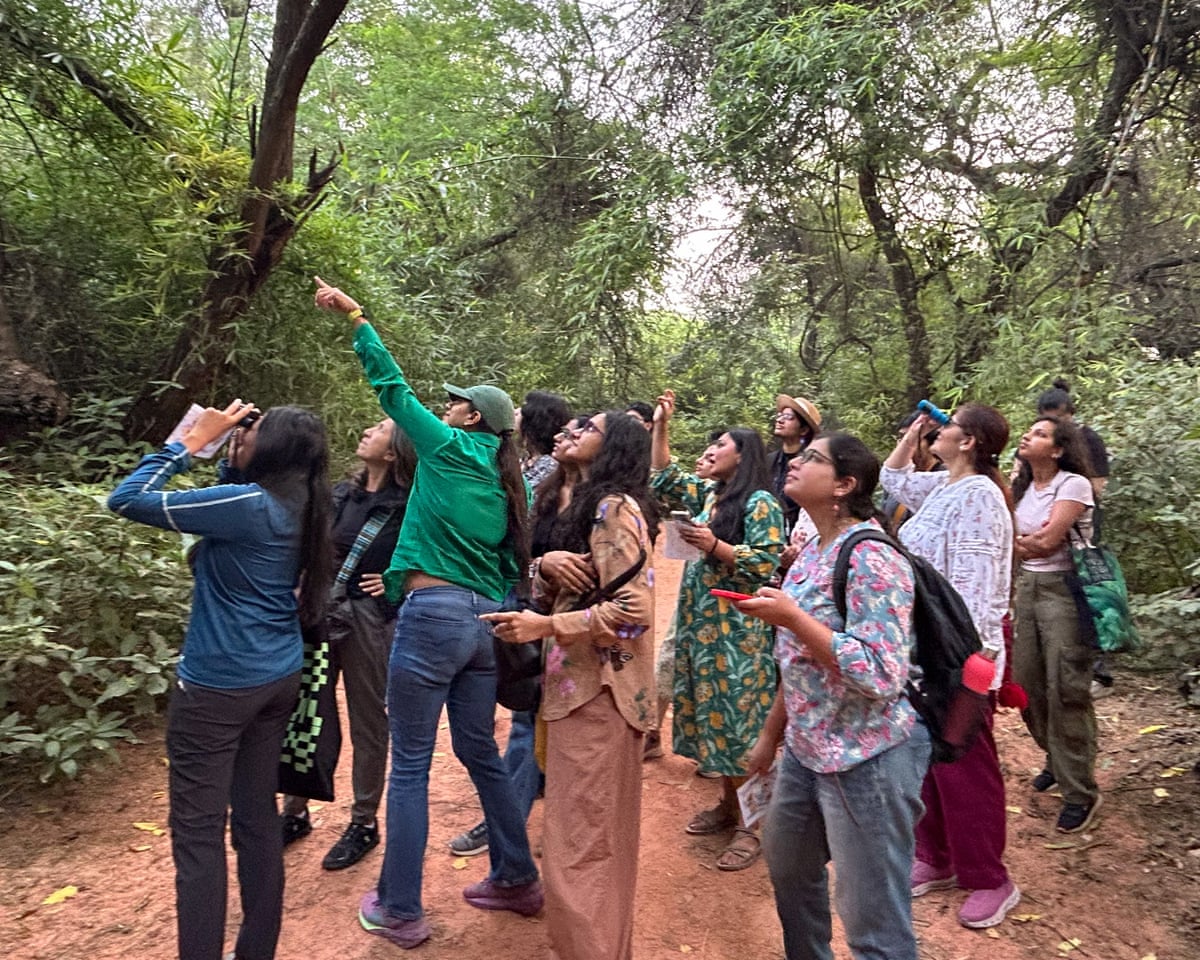
Women interested in nature and wildlife exploration in the Indian capital are forming group excursions to navigate safety challenges in public spaces. In city forests like Sanjay Van, participants gather during daylight hours to explore natural ecosystems, observe flora, and track local animal species.
The outings are organized by Neha Sinha, author of an urban wildlife book focused on Delhi. Sinha has led these walks for two years, giving participants a supportive environment to study nature in a city where female researchers and hobbyists frequently face harassment or intrusive questioning while working alone outdoors.
During a recent morning gathering at Sanjay Van, around 20 women—including scientists, psychiatrists, planners, and students—joined together to explore the ancient woodland. The group observed avian species such as black kites, drongos, and tailorbirds, while also examining local plant life using field equipment.
Safety Precautions and Fieldwork
To ensure safety during outdoor research, participants coordinate travel, meet at designated entry points, and remain in groups while traversing secluded trails. Experienced naturalists note that while wildlife follows predictable behaviors, managing human interactions remains the primary safety concern for women conducting field studies.
Government restrictions following safety incidents in public parks have limited evening access to some green spaces. However, organizers aim to arrange future night walks, which would allow participants to experience nocturnal ecology, including vocalizations from jackals, activity from frogs, and bioluminescent fireflies.
Despite urban expansion, Delhi hosts diverse wildlife populations within its green corridors. Species such as jackals, flying foxes, civets, owls, hyenas, and leopards inhabit the urban landscape alongside thousands of fruit bats that emerge nightly near city center trees.


