Reptiles and amphibians
Captive-bred San Francisco garter snakes enter the wild
Dozens of young reptiles raised under a head-starting project have returned to nature to help pull their endangered species back from extinction.
Reported by The Guardian · · 1 min read
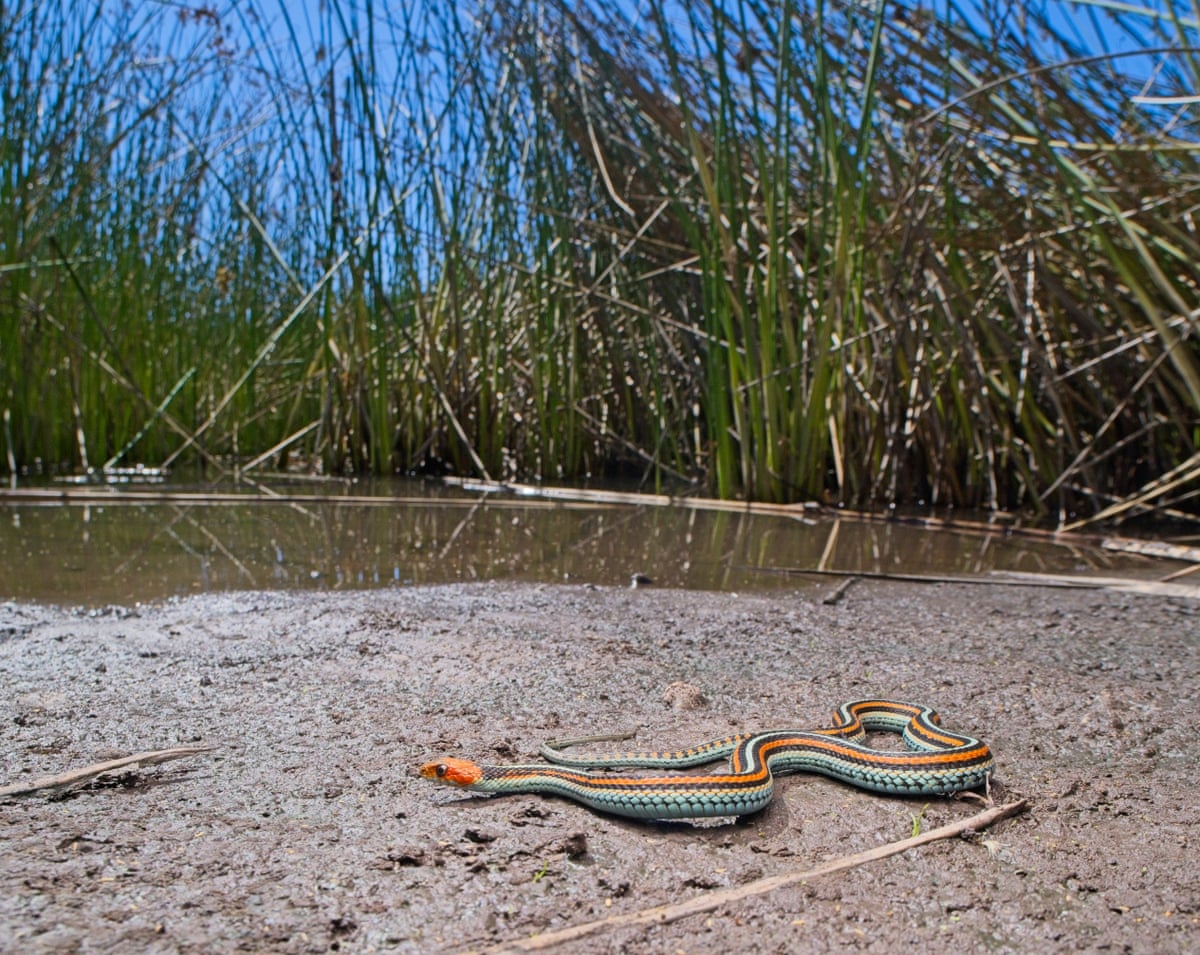
Dozens of young San Francisco garter snakes that grew up under specialized human care have been set free into local habitats. The autumn relocation marks the initial release phase of an initiative intended to rebuild dwindling populations of the colorful serpent, which lives exclusively around the San Francisco peninsula.
Sixty-two individual serpents were distributed across selected locations within San Mateo County. Wildlife authorities frequently celebrate the reptile for its distinct look, featuring crimson heads alongside turquoise undersides and vibrant lateral bands. Even so, the harmless creature has stayed on federal endangered lists for longer than fifty years.
The animals participated in a collaborative head-starting effort involving various non-profit groups as well as regional and national agencies. In 2025, field workers from the US Geological Survey captured gravid females to transfer them to the San Francisco Zoo. The adult mothers were subsequently released, while staff nurtured the hatchlings until they grew sturdy enough to fend for themselves outdoors.
Before distributing the cohort across the landscape, specialists performed DNA profiling on every specimen to select optimal habitats. Dr Rochelle Stiles, who oversees field conservation at the facility, explained that sheltering the young during their fragile early phase equips them with a significantly improved foundation for surviving unsupervised.
Urban expansion and construction projects have continually shrunk and split the serpent's traditional territory. At the same time, the creatures must cope with illegal capture, declining prey supplies, water shortages, infectious illnesses, aggressive non-native competitors, and limited genetic diversity.
Biologist Karine Tokatlian, representing the Midpeninsula Regional Open Space District, highlighted that returning these animals to open land reflects extensive habitat repair and multi-agency cooperation. Another clutch exceeding 130 infants arrived at the grounds during the current season, with caretakers planning to set them loose in 2027.