Birds
UK parakeets face public hunting push amid debate
A proposed legal change could allow widespread shooting of ring-necked parakeets, sparking controversy over invasive species management.
Reported by The Guardian · · 2 min read
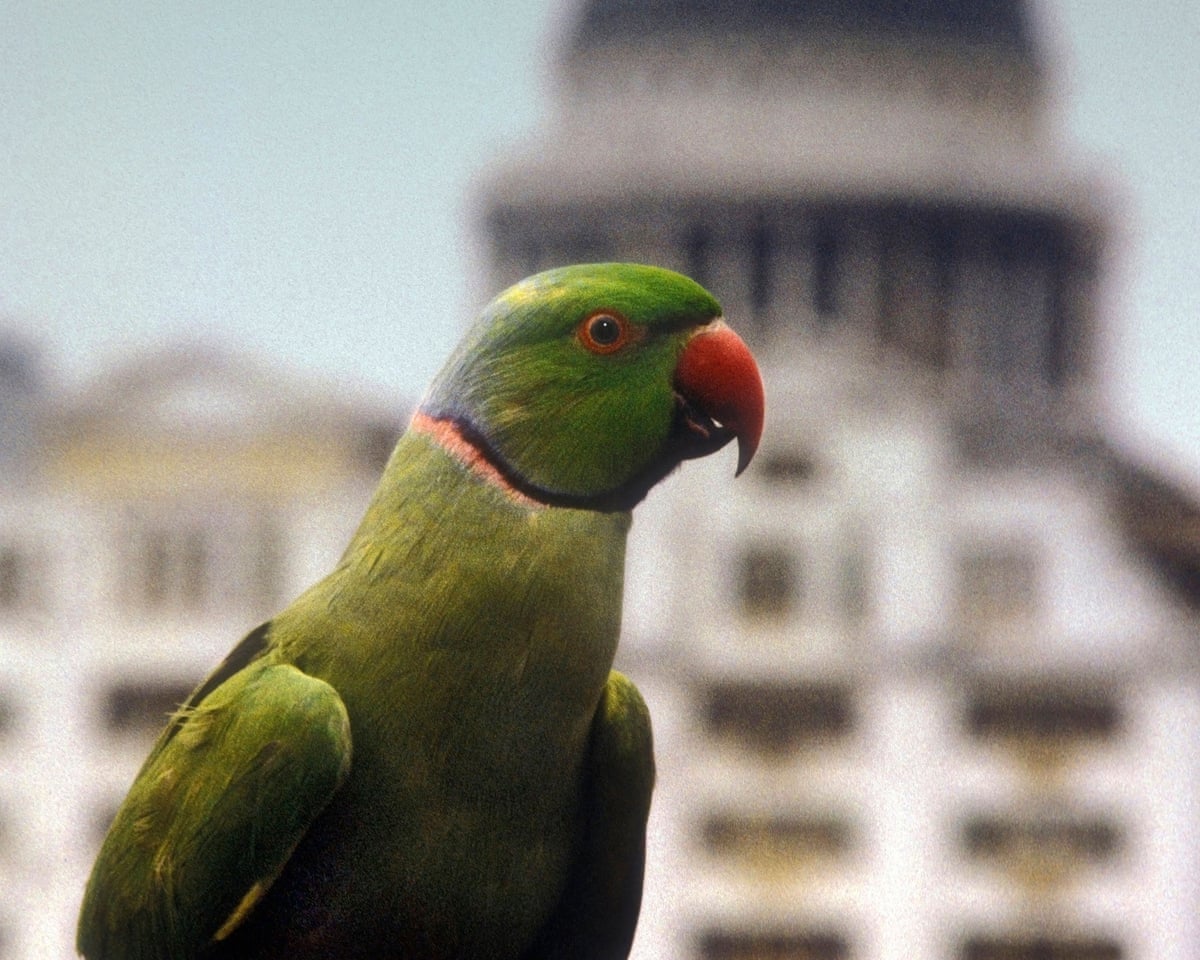
The bright green ring-necked parakeets that have become a familiar sight across British cities are now at the center of a contentious debate over how to manage their growing populations. A government consultation has proposed adding the species to the UK’s quarry list, which would allow landowners and hunters to shoot them without restrictions—sparking accusations of xenophobia and overreach from conservation groups.
Origins and expansion
First arriving in Britain decades ago, these Himalayan birds—now genetically distinct from their Asian ancestors—have thrived in urban and rural environments. Their rapid spread, from a handful of sightings in the 1950s to an estimated 50,000 individuals today, has been attributed to repeated releases of escaped pets rather than any single legendary event, like Jimi Hendrix’s alleged 1968 release of a pair in London. Postwar pet-keeping booms in the mid-20th century provided the conditions for their self-sustaining colonies, with breeding pairs first documented in Croydon in 1971.
While once confined to southern England, parakeets have since expanded northward, reaching Scotland by the 2010s. Their adaptability to cooler climates—thanks in part to their Himalayan origins—has allowed them to establish roosts in unexpected places, such as London’s Hither Green cemetery, where thousands gather daily at dusk. Though their presence is celebrated for their vibrant plumage and communal behavior, concerns have grown over their ecological impact, including competition with native birds and potential disease transmission to poultry.
Ecological and public health concerns
Researchers have linked parakeets to declines in some native bird and bat populations, and they are known carriers of Newcastle disease and *Cryptosporidium*, a parasite that can affect humans. While lethal control measures have been discussed—including a 2021 government proposal that was abandoned due to cost—nonlethal methods have proven ineffective at slowing their growth. An Oxford study from 2003 estimated that London’s population would need to be reduced by 30% annually just to stabilize, highlighting the scale of the challenge.
The British Association for Shooting and Conservation (BASC) has led the push to include parakeets on the quarry list, arguing it would provide landowners with a practical tool to protect crops and wildlife. However, critics argue the proposal is driven by anti-immigrant sentiment rather than sound conservation science. Conor O’Gorman of BASC emphasized that the focus is on rural incursions, not urban populations, which he described as ‘here to stay.’ The consultation, which closed in March, will determine whether the change proceeds, marking a shift in how Britain manages its most visible invasive species.