Birds
Rare Siberian rubythroat discovered in northern England
A wandering Asian songbird thousands of miles off course was recovered in Cumbria after being caught by a domestic cat in a rural valley.
Reported by The Guardian · · 1 min read
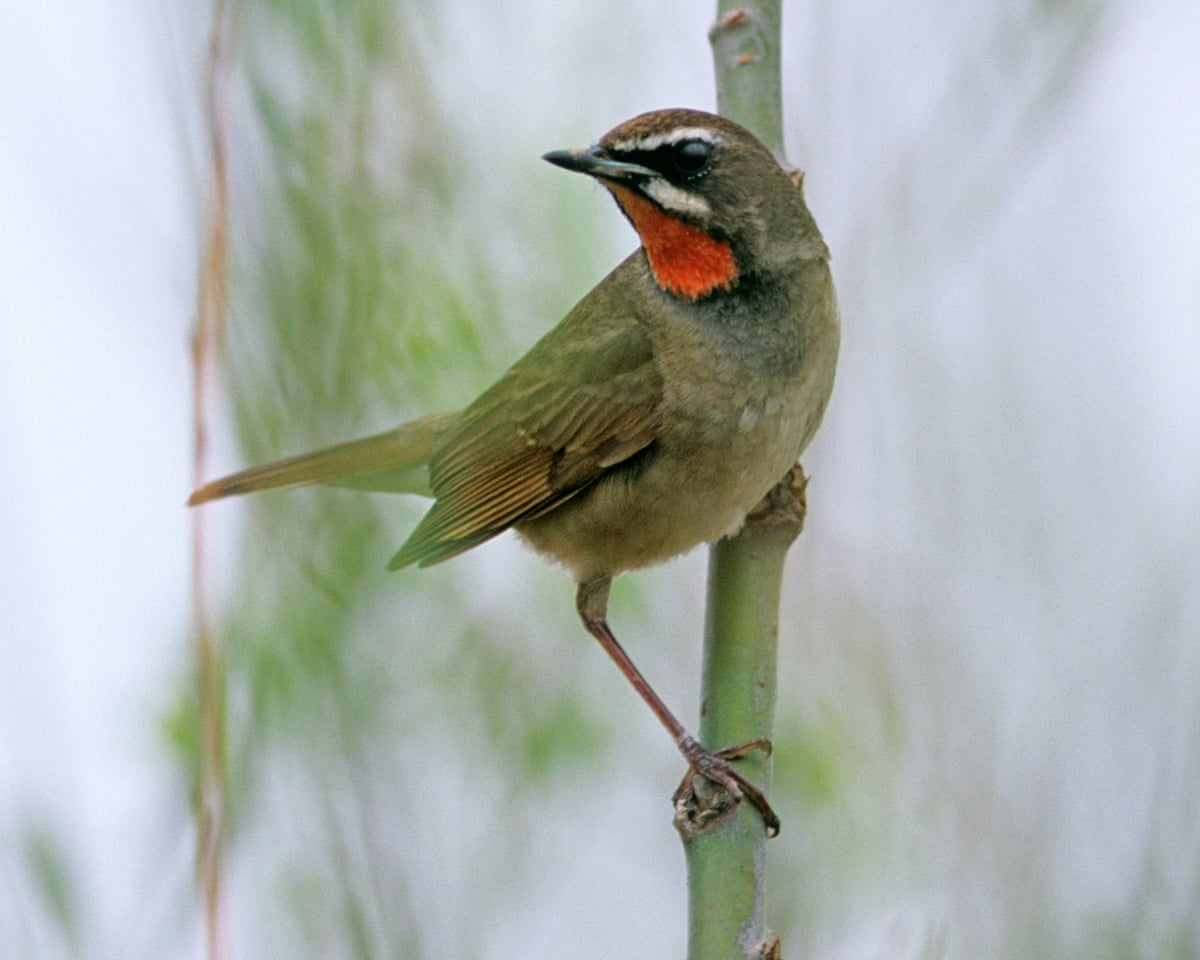
A rare migratory Asian songbird has surfaced in northern England after drifting vastly astray from its standard journey. A Siberian rubythroat, which typically travels from Siberian breeding territories toward wintering destinations in southern Asia, was discovered dead in Cumbria after an encounter with a local pet cat.
Chris Hind, who monitors avian sightings for Cumbria, characterized the incident as extraordinary. British sightings of the species remain exceedingly scarce, with merely seventeen historical detections documented across the United Kingdom. Fifteen of those prior occurrences took place on northern Scottish islands, leaving just two confirmed records across the entire British mainland.
The recovery unfolded over the weekend when the Royal Society for the Protection of Birds alerted Hind to a report from a resident in northern Cumbria. The homeowner had noticed an unfamiliar bird brought indoors through a pet door by her feline. Captivated by an unusual reddish-orange plumage beneath its bill, she preserved the carcass in a household freezer and notified wildlife authorities.
Ornithologists remain intrigued by why the creature journeyed westward rather than toward the south. Hind observed that comparable movements occur among yellow-browed warblers, whose increasing arrivals in Britain have led some researchers to consider whether such travel might represent deliberate navigation rather than accidental wandering.
Physical inspection showed the songbird was severely emaciated, weighing approximately 28 grams compared to the typical species expectation of around 73 grams. Because rubythroats are reclusive skulkers that stay concealed in dense shrubs, Hind noted the bird likely would have gone entirely unnoticed without the predatory intervention of the outdoor pet.
Scientists intend to gather biological material from the specimen before transferring it to the Tullie House museum located in Carlisle. Officials hope to prepare the colorful bird for public exhibition, providing visitors with an opportunity to observe a remarkably displaced traveler.