Birds
Great egrets make a striking return in Cambridgeshire
Once pushed toward extinction by feather hunting, large white herons are now multiplying across restored wetland habitats in eastern England.
Reported by The Guardian · · 1 min read
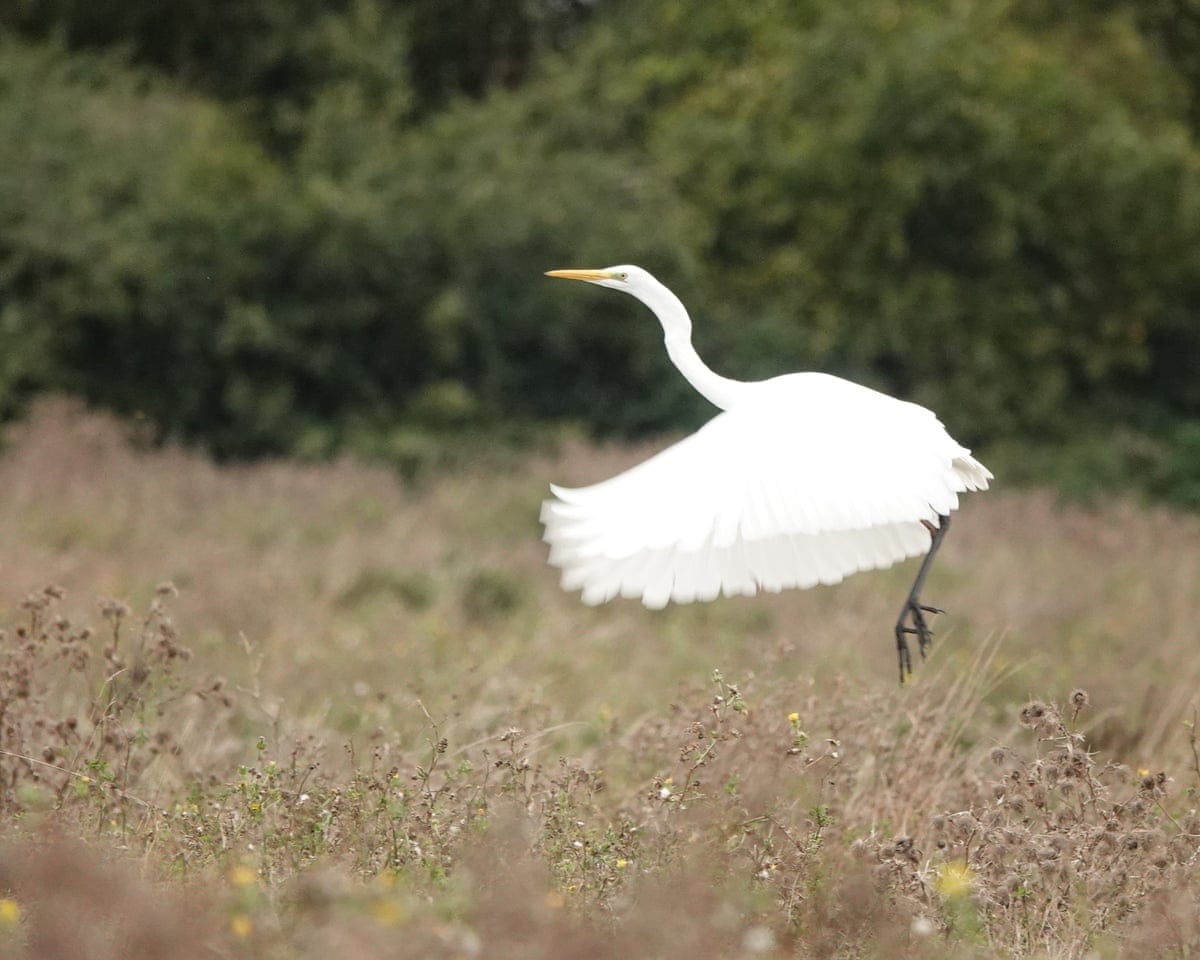
A group of thirteen great egrets was recently observed stalking prey in a drought-affected Cambridgeshire field, demonstrating the ongoing resurgence of a bird once threatened with severe regional decline. The tall white birds, comparable in size to grey herons with pale orange beaks and light yellow eyes, were spotted hunting voles across parched ground instead of pursuing their usual aquatic diet.
The sighting highlights a remarkable demographic recovery across Europe. Intense hunting driven by Victorian millinery and haute couture fashion previously drove the birds close to extinction. After decades of steady conservation gains across continental Europe, the species established a breeding foothold in the United Kingdom around 2010. By 2019, conservation records showed twenty-four nesting pairs, while seasonal gatherings during the winter are now estimated to reach hundreds or even thousands of birds.
Habitat transformation
Their regional resurgence coincides with large-scale environmental engineering at Ouse Fen. A long-term collaboration between a commercial gravel-quarrying company and the Royal Society for the Protection of Birds is transforming low-grade farmland into an extensive wetland complex that will eventually span 3,000 hectares.
The newly engineered fenland has rapidly attracted diverse wildlife. Species such as marsh harriers, bitterns, spined loaches, and water voles currently inhabit the developing waterways. Archaeological research at the site indicates that Neolithic bone deposits were dominated by beavers and Dalmatian pelicans, providing a historical blueprint for the wetland's ongoing ecological restoration.