Ocean life
Leatherback Turtles Shift Nesting to Ecuadorian Shores
Researchers say cooler waters may be drawing the world's largest sea turtle more than 1,000 miles from its traditional breeding grounds.
Reported by ScienceDaily · · 2 min read
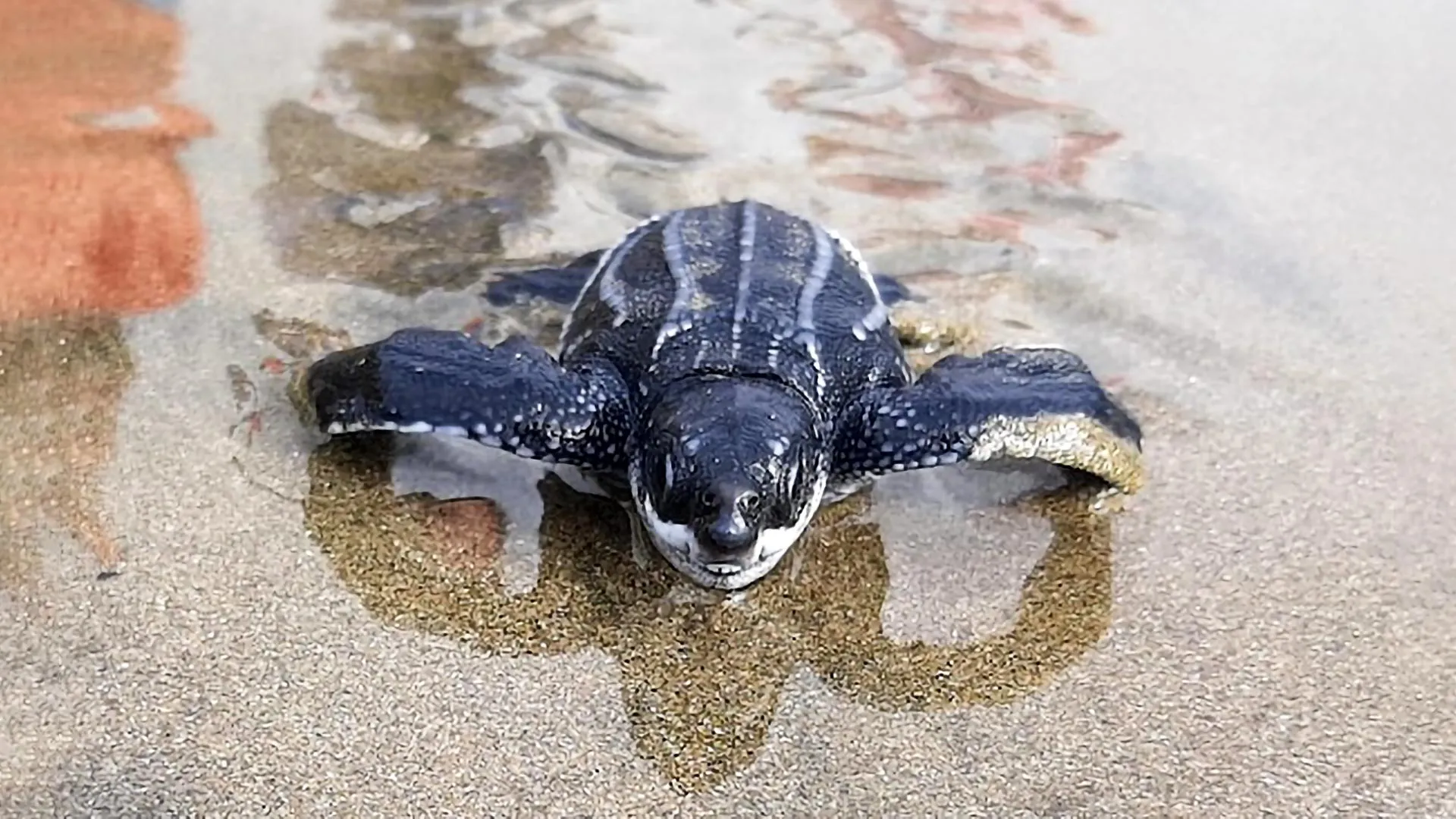
During the 2025-2026 nesting season, scientists recorded a record-breaking number of eastern Pacific leatherback nests along Ecuador's coastline, more than 1,000 miles south of the species' established breeding grounds in Mexico and Costa Rica. The finding, published in Chelonian Conservation and Biology, has raised fresh optimism for a subspecies researchers project could disappear from the eastern Pacific within 60 years.
A possible response to warming seas
Juan José Alava, adjunct professor at Simon Fraser University and co-author of the study, said the shift in nesting activity may reflect the turtles' response to warming ocean temperatures. He noted that while spotting mature female eastern Pacific leatherbacks on Ecuadorian shores used to be rare, the data suggest the animals are adjusting their breeding cycles to survive in these southerly settings.
The team reviewed more than 45 years of coastal records, tracking sightings of mature females, nesting attempts, egg counts, hatching outcomes, and stranding events, then cross-referenced them with El Niño and La Niña cycles. Over the past decade, nesting activity has risen during La Niña phases, when southeastern tropical Pacific waters cool. Egg counts and hatching proportions matched those from established northern sites, and some Ecuadorian nests even outperformed the northern average.
The eastern Pacific leatherback stands apart from other sea turtles in its ability to tolerate both warm and cold waters. Each year the animals migrate thousands of miles between tropical breeding beaches and subpolar feeding zones where jellyfish provide summer forage. More than 150 confirmed sightings have been logged off British Columbia between 1931 and 2024.
Despite this adaptability, the population has fallen by over 90 percent since the 1980s. Alava points to El Niño warming intensified by climate change, along with bycatch, plastic debris, vessel strikes, egg poaching, and habitat loss. He called for sustained monitoring, reduced fisheries bycatch, and management of Ecuadorian coastal areas in partnership with local communities and traditional ecological knowledge.
One turtle's remarkable season
One turtle, nicknamed Bella by the team, illustrated both the promise and the challenges of the new zone. During a moonlit night in January 2026 she came ashore at Playa de Crucita but was disoriented by streetlamps and abandoned the attempt. Two nights later she nested at a quieter spot, laying 47 eggs, 44 of which hatched. A tracking tag applied beforehand showed she completed four to five nesting attempts that year. One nest stayed at its original site; the rest were moved to the San Jacinto hatchery. In total, 134 of her 146 eggs produced hatchlings, a 91.8 percent success rate.


