Pets
Ancient hairless dog mummies discovered in Peru
Excavations at a pre-Inca coastal site reveal mummified remains and burials showing the complex lives and diets of native hairless canines.
Reported by ScienceDaily · · 2 min read
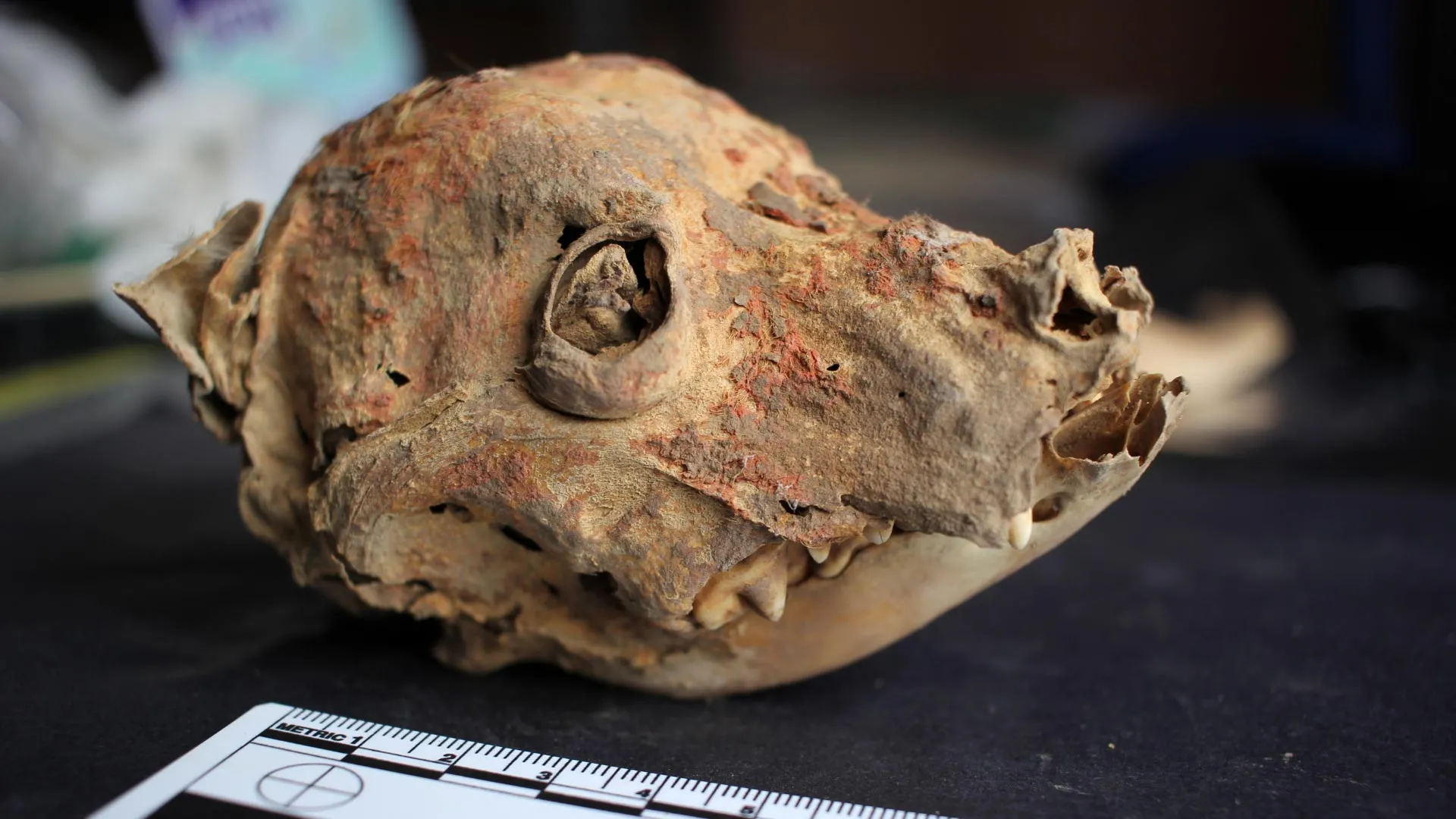
Archaeological excavations at the Castillo de Huarmey coastal complex in northern Peru have brought to light the preserved remains of hairless canines dating back more than 1,200 years. Described in the Journal of Anthropological Archaeology, the finds provide the earliest direct physical proof of the indigenous breed at this administrative center of the ancient Wari Empire, which flourished centuries prior to Inca rule.
Arid desert conditions helped preserve several canine specimens, including a remarkably intact male skeleton lacking only parts of its front legs, as well as a skull bearing dried skin, ears, and red cinnabar pigment. Researchers initially questioned whether the specimens might be modern intruders following past site disturbances. However, anatomical traits confirmed their antiquity: the animals exhibited natural hairlessness alongside missing premolars, a congenital dental absence linked directly to the hairless genetic mutation.
Altogether, researchers identified 341 canine bones representing at least 19 separate individuals alongside the mummified adult male. The contexts of these remains indicate that dogs held diverse positions in community life. A young pup only several weeks old was placed beside a prominent artisan, while other dogs were interred within palace structures or beside individuals believed to have been tomb guardians. Other remains were found within refuse, reflecting contrasting human attitudes toward different animals.
Chemical examinations of dental and skeletal tissues further illuminated how these animals lived. Isotopic data tracking carbon, nitrogen, oxygen, and strontium demonstrated that many dogs consumed maize, matching local human dietary staples. Young hairless pups showed feeding patterns remarkably similar to human youngsters before diversifying their intake later in life. Additionally, rare signs of butchery indicate that the community rarely utilized dogs for sustenance.
Radiocarbon testing confirmed the primary mummified specimen is at least 1,200 years old, establishing it as the oldest dated biological material recovered from the Huarmey ruins. Beyond expanding understanding of pre-Hispanic domestic animals, the discoveries offer vital chronological markers for the complex settlement.