Birds
Massive crane migration fills Hungarian skies
Tens of thousands of common cranes are congregating in Hortobágy National Park, creating an immense acoustic spectacle during their annual autumn journey.
Reported by The Guardian · · 1 min read
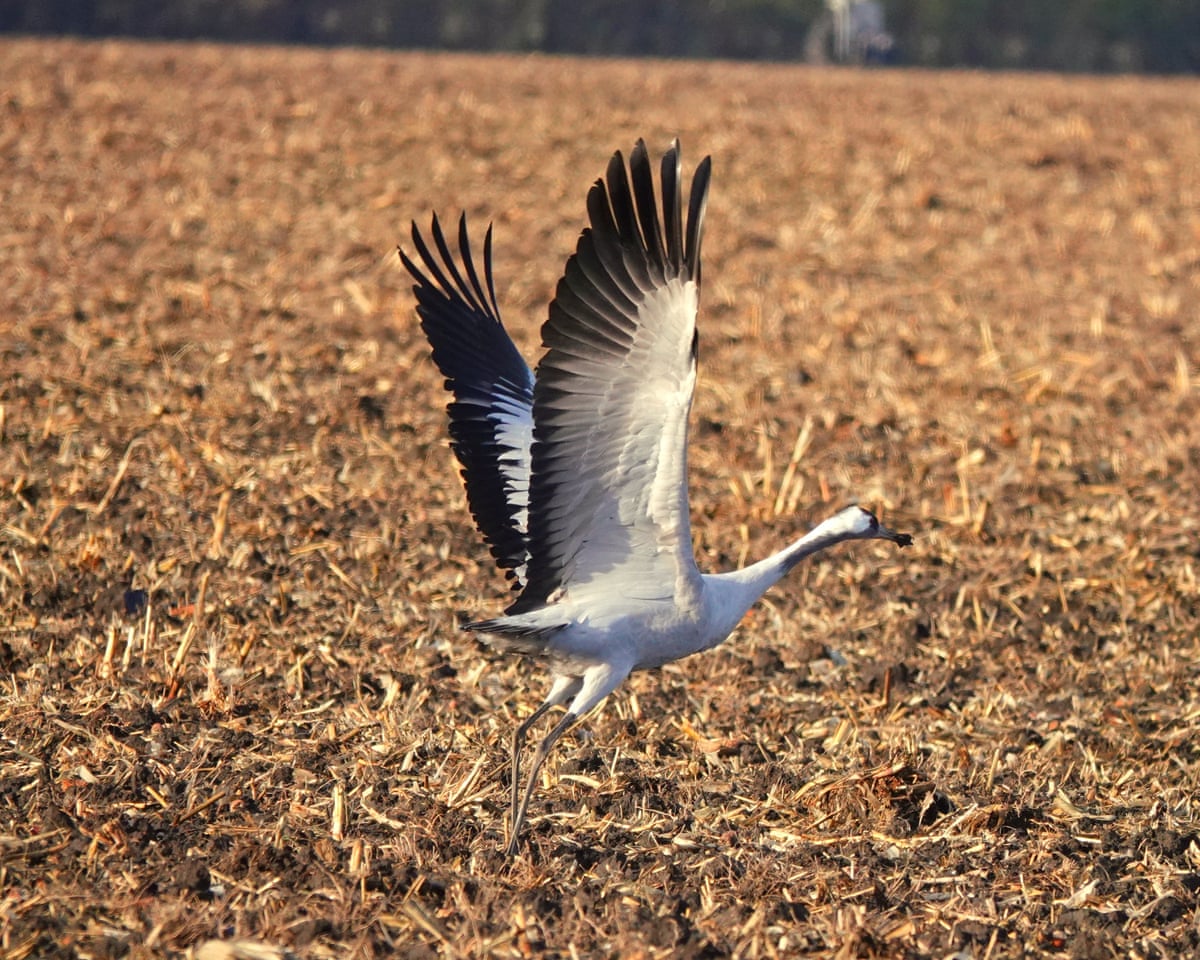
Nearly two hundred thousand common cranes have gathered at Hortobágy National Park in Hungary, marking an enormous migratory stopover for Europe's tallest birds. Recent autumn monitoring recorded approximately 180,000 individuals gathering across the famed national reserve, with around 50,000 cranes settling at the park's only accessible public viewing location.
Standing about 1.4 metres in height and possessing a wingspan of two metres, the large birds fly with slow, rhythmically precise movements. When seen en masse, their aerial congregations span entire landscapes and the skies overhead. At the close of day beneath a Hunter's moon, incoming flocks descend to their roosting grounds.
While the visual spectacle is immense, observers note that the acoustic impact is even more profound. A crane's vocal anatomy includes an elongated trachea housing the syrinx, which produces a sound frequently termed bugling. The trumpeted call gains in volume and pitch, marked by a coarse, rasping quality that sounds strained or intensely emotional.
The birds generally fly toward their roosting sites in small clusters or V-shaped flight lines. As individual cranes call out during flight, their vocalizations prompt replies from neighboring birds along the path. This continuous answering creates a structured, harmonized chorus among members of each traveling party.
However, this coordinated harmony gives way to chaos when separate groups amalgamate into congregations of thousands and tens of thousands. As the birds circle and land together, individual notes disappear into a roaring torrent of voices. The resulting symphonic sound, among the most overwhelming in European nature, was famously compared in Homer's Iliad to the violent clash of armies in combat.
Every visiting crane links the Hungarian plains to its birthplace in the northern wilderness. Many of the birds were born twenty to thirty years ago in the bogs, marshes, or taiga forests of Poland, Ukraine, or Russia, native territories where they return each year to breed before making their annual journey south.