Reptiles and amphibians
Ancient crocodiles survived asteroid thanks to warm refuges
New research shows that prehistoric reptiles relied on equatorial sanctuaries where mild temperatures lingered while dinosaurs disappeared.
Reported by ScienceDaily · · 2 min read
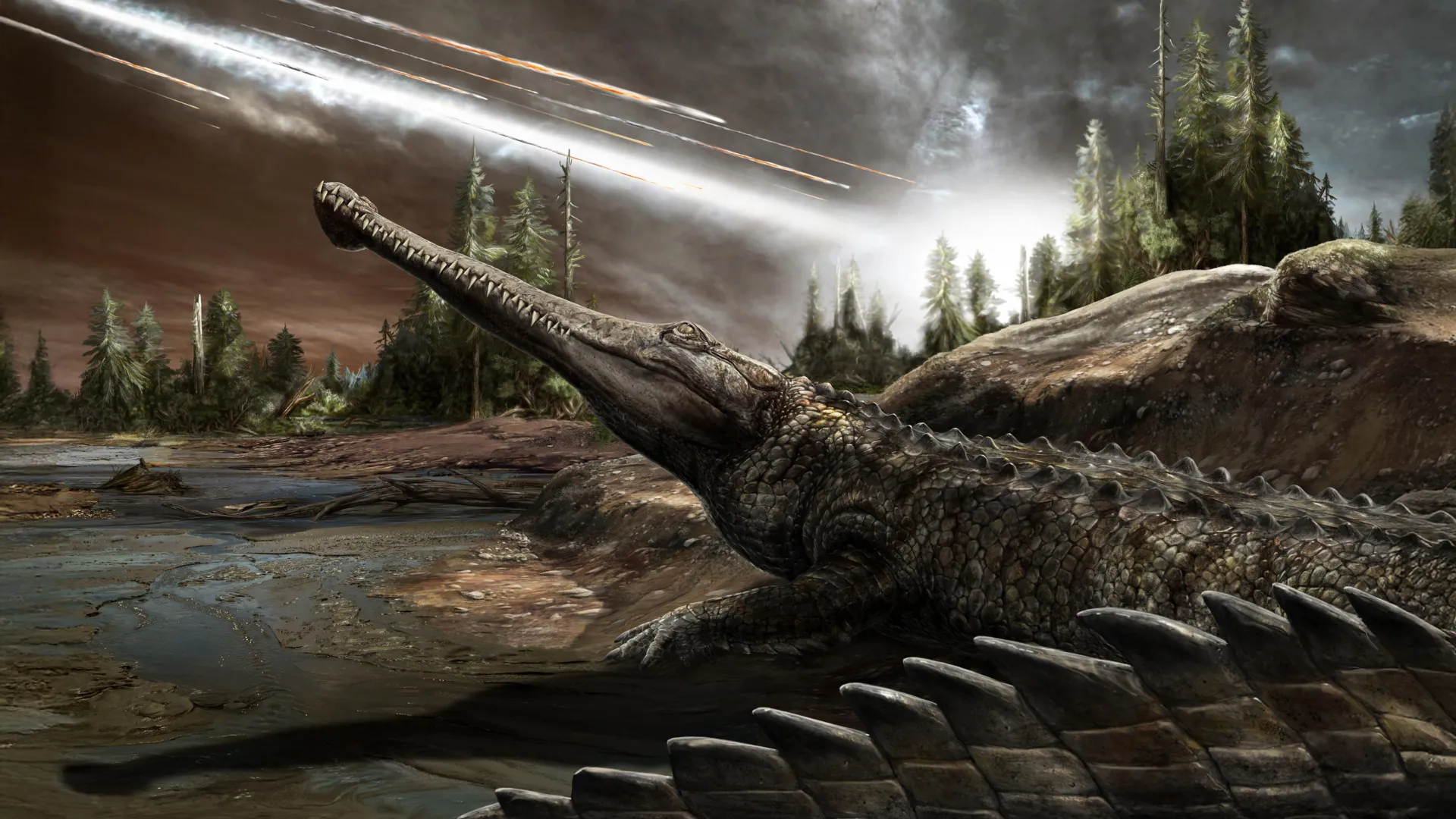
When an asteroid strike devastated Earth roughly 66 million years ago, non-avian dinosaurs perished, but prehistoric crocodile ancestors managed to endure. A new investigation published in Science Advances indicates that their longstanding affinity for warmer weather positioned them inside equatorial zones where livable conditions persisted after the catastrophe.
Investigators led by scientists at University College London evaluated more than seven thousand fossil specimens alongside records spanning over four hundred contemporary and vanished species. By pairing these records with geographic and climatic reconstructions covering 245 million years, the team traced how crocodylian ancestors tracked shifting thermal belts rather than acclimatizing to drastic weather swings.
Computer simulations revealed that equatorial and subtropical locations remained habitable for these reptiles following the collision, even when sunlight dropped by five or ten percent due to atmospheric dust and debris. Lead researcher Alfio Alessandro Chiarenza explained that the impact did not create uniform devastation across the globe, allowing warm equatorial shelters to preserve populations that eventually replenished elsewhere.
Diverse ancestors and modern obstacles
Although modern species appear relatively similar, fossil ancestors displayed exceptional ecological variety. The wider lineage included armored plant consumers, fully terrestrial hunters, and gigantic carnivores such as Sarcosuchus, an immense predator stretching twelve meters. Despite dramatic shifts in physical form across millions of years, their reliance on warm surroundings stayed remarkably constant throughout their evolutionary journey.
The team identified minor exceptions, including a Cretaceous branch that endured higher thermal extremes around 94 million years ago, and Australian forms that adjusted to arid conditions 34 million years ago. Furthermore, physiological traits like low energy needs, semi-aquatic habits, smaller physical profiles, and cold-blooded metabolisms also aided their overall survival during the cataclysm.
However, researchers warn that this ancient survival method could falter in modern landscapes. Study co-author Philip Mannion noted that while prehistoric crocodiles simply migrated to follow optimal temperatures, present-day populations face severe movement barriers caused by expanding roads, farmland, and urban infrastructure.