Ocean life
California beach closes after great white shark sighting
A two-mile section of Huntington Beach was shut down through Wednesday afternoon after lifeguards received reports of a circling predator.
Reported by The Guardian · · 1 min read
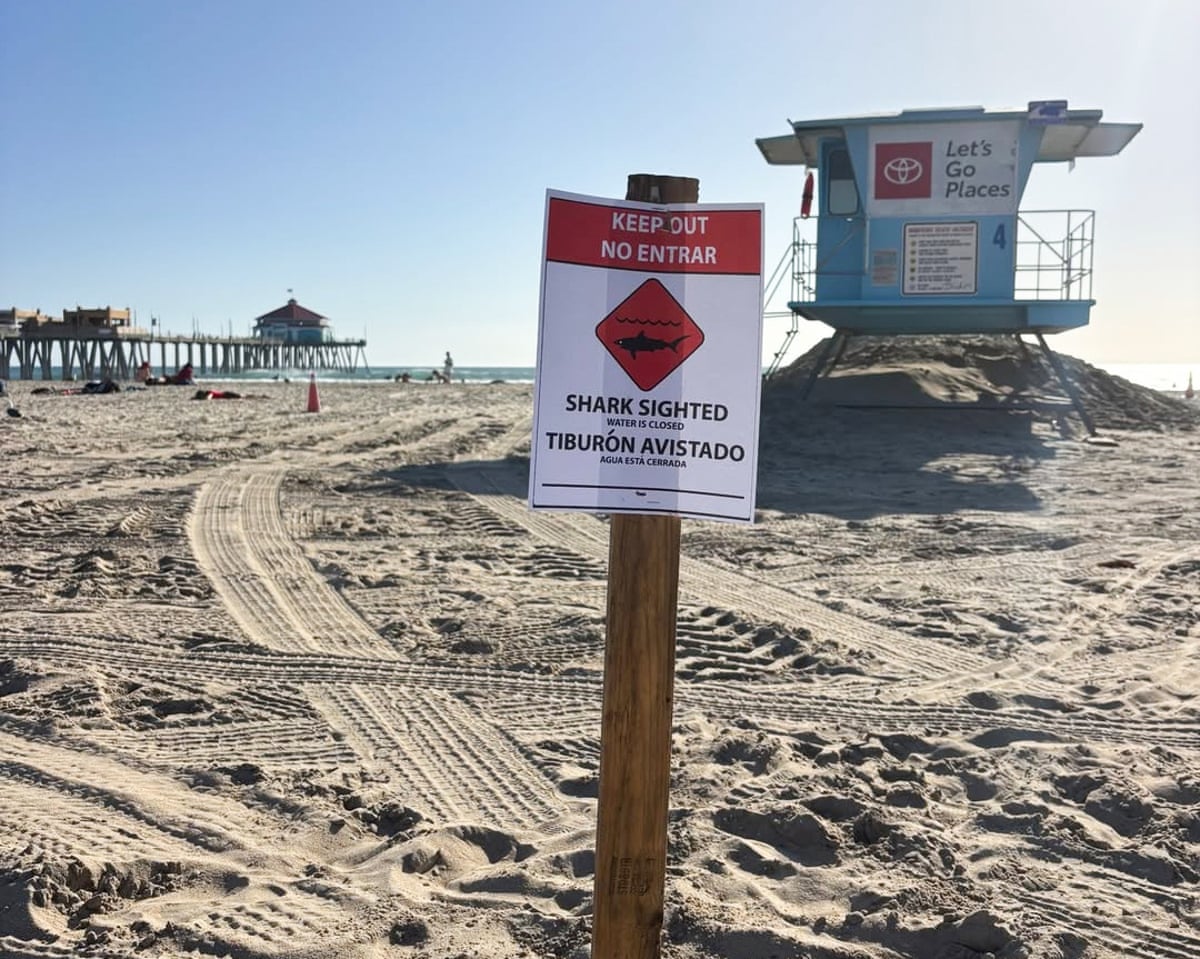
Authorities in southern California temporarily closed a two-mile expanse of shoreline after a great white shark was observed acting aggressively. The closure took effect along Huntington Beach on Tuesday afternoon and remained active through Wednesday afternoon, covering the coastal area between Seapoint and the municipal pier.
The Huntington Beach Fire Department initiated safety protocols following what officials designated as a credible report. Witnesses spotted a shark measuring between 10 and 12 feet circling near a lifeguard station. Under local marine safety procedures, this specific circling activity meets the threshold for aggressive behavior, prompting emergency responders to intervene.
Emergency personnel promptly cleared water users from the Orange County location, which regularly draws enthusiasts of surfing and swimming. Field teams erected advisory notices along the sand and notified beach visitors directly. Fire officials emphasized that community protection remained their foremost priority and urged everyone to respect posted warnings and heed directions given by lifeguards.
The incident follows an unusual surge of great white sharks noted across California during the summer months. Immature sharks traveled northward away from warmer waters off Mexico because of El Niño conditions. Wildlife experts previously advised the public that these seasonal shifts in predator distribution should not cause panic.
Physical encounters between humans and sharks remain remarkably rare, according to figures compiled by the California Department of Fish and Wildlife. The state agency has cataloged under 250 total shark incidents since 1950, with fewer than 20 proving fatal over that extensive timeframe.
Scientists also note that when contact does take place, the animals are typically conducting exploratory bites. The wildlife department indicated that such incidents occur because the predators are simply examining unfamiliar objects encountered within their natural habitat, such as kayaks.