Birds
Upper Laguna Madre Bird Nesting Island Cleanup
Every spring, the islands of the Upper Laguna Madre near Corpus Christi, Texas come alive with nesting waterbirds. Terns, herons, egrets, black skimmers…
Reported by U.S. Fish and Wildlife Service · · 1 min read
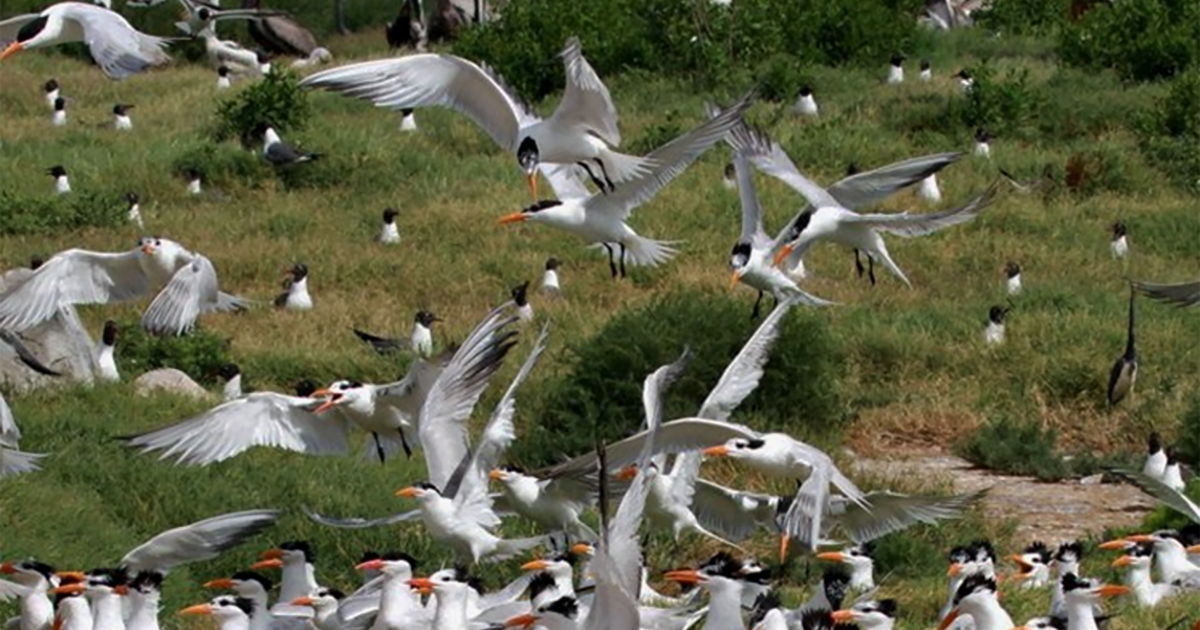
Every spring, the islands of the Upper Laguna Madre near Corpus Christi, Texas come alive with nesting waterbirds. Terns, herons, egrets, black skimmers, and other coastal birds gather in bustling colonies, raising their young along the Texas coast. Keeping these nesting grounds safe takes a lending a hand from the local community.
On October 10, more than 50 volunteers joined conservation partners for the 20th Annual Bird Nesting Island Cleanup – continuing a tradition that began two decades ago with the Coastal Program and the Coastal Bend Bays and Estuaries Program. The shared mission is simple, but important: remove trash and debris from coastal islands and protect the birds that depend on them.
Discarded fishing lines, discarded plastic bottles, among other trash and debris can wash ashore and become dangerous hazards for nesting birds and their chicks. Birds can become entangled in fishing lines, while curious young birds may mistake plastic objects for food. When the cleanup effort first began, volunteers regularly encountered dead birds entangled in fishing lines on nearly every island.
Two decades of dedication have made a difference. This year, volunteers found just one incident involving entangled wildlife – a striking reminder of how sustained community stewardship can improve conditions for coastal birds and the places they call home.
The annual cleanup brought together partners from the Coastal Bend Bays and Estuaries Program, Texas Parks and Wildlife Department, Texas General Land Office, Texas A&M University–Harte Research Institute, U.S. Fish and Wildlife Service, City of Corpus Christi, and local business Doc’s Seafood.
Twenty years on, the effort is about more than picking up litter. It is a testament to what local communities and conservation partners can accomplish when they work together – caring for the wildlife and natural places important to them.