Ocean life
Rainbow sea slug spreads to Cornwall with warming seas
A flashy nudibranch normally found off Spain and Portugal is turning up in southern England as seas warm, delighting rockpoolers.
Reported by The Guardian · · 1 min read
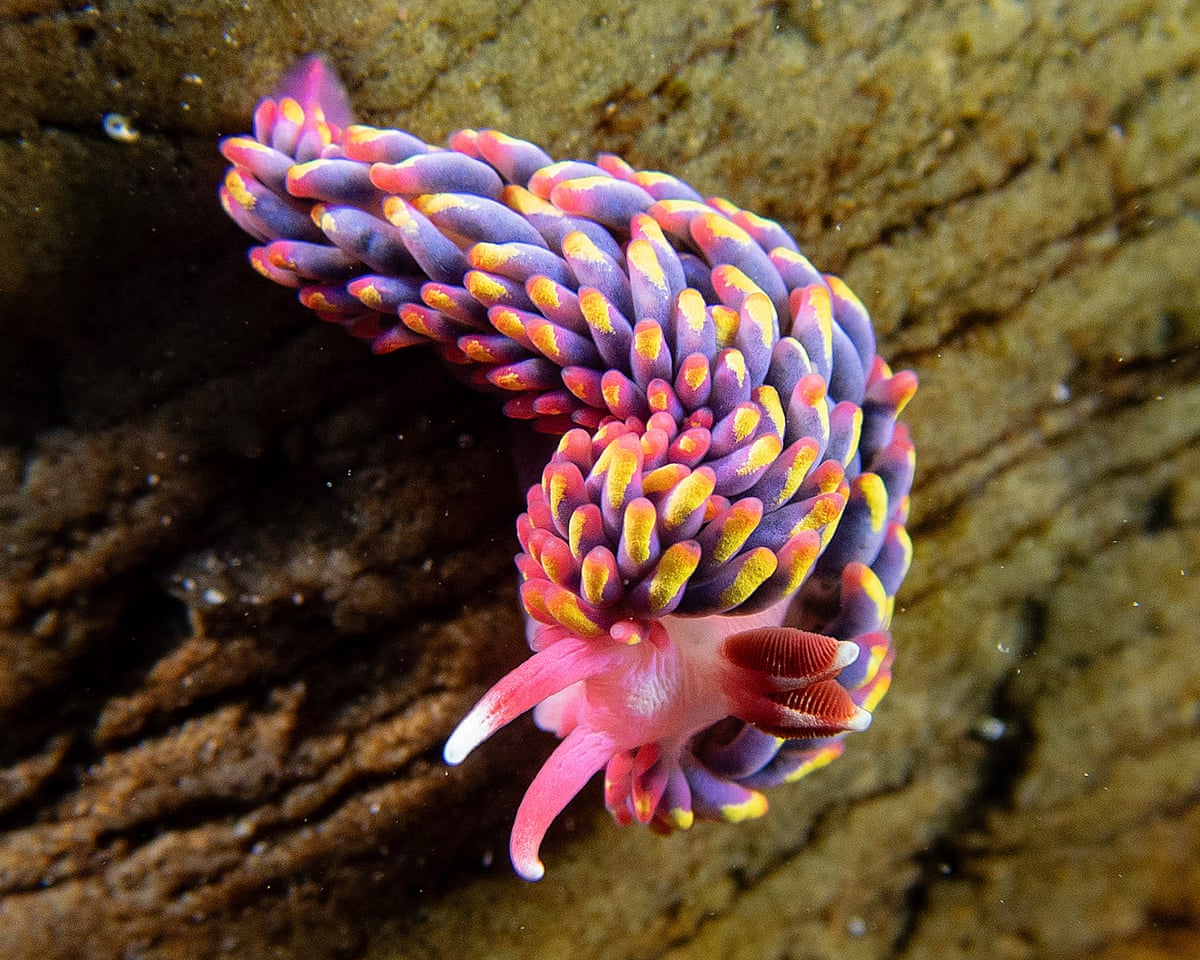
Marine biologists and volunteers taking part in a seashore survey in Falmouth, Cornwall, got a flamboyant surprise when they came across a rainbow sea slug. The small creature, only a couple of centimetres long, was found curled under a submerged rock, looking like a piece of bright costume jewellery.
The species is normally seen along the coasts of Spain and Portugal, but it has been moving north as sea temperatures rise. It was first recorded in UK waters off the Isles of Scilly in 2022 and has since become established in sheltered bays in Cornwall and Devon, according to the report.
The find happened during a 'bioblitz' organised by the Rock Pool Project, a community group that runs monthly citizen-science surveys of rocky shore life. The rainbow sea slug was the highlight of the morning, drawing a small crowd of enthusiastic rockpoolers.
Its appearance is striking: a vivid pink body covered with blue finger-like projections called cerata, tipped with yellow and orange. The bold, pop-art colouring serves as a warning to predators that the slug tastes bad.
The specimen was discovered on the underside of a rock next to white circles of freshly laid eggs, suggesting the species is breeding in the area.
Project volunteer and marine biologist Ellie Maynard said she first saw a rainbow sea slug the previous Christmas and has since spotted more than 20 in the area, describing the rise in numbers as rapid.
The morning also turned up another recent arrival: the hair curler slug, which was first recorded in the UK last September. Its wavy brown cerata give it the appearance of having a perm.
After being admired, the rainbow sea slug eventually moved off, described by the observer as resembling an overdressed performer late for a carnival.


